
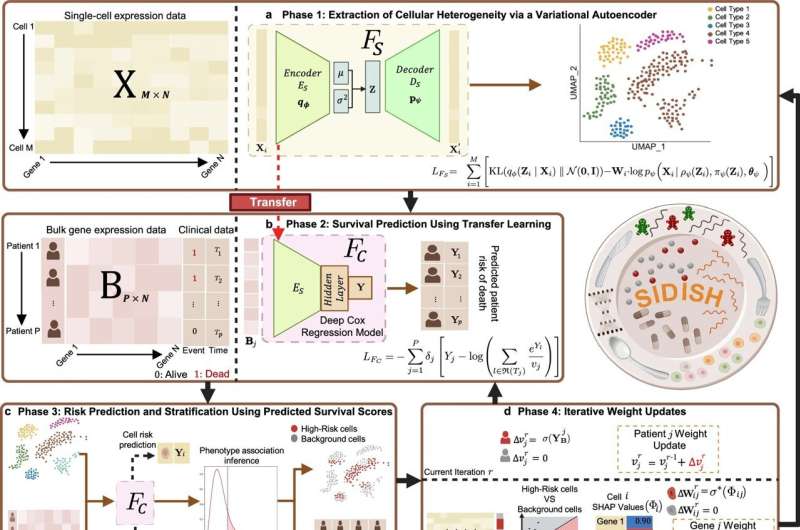
In a preclinical study published in Nature Communications, SIDISH successfully identified “high risk” cells across pancreatic, breast and lung cancers using tumor samples collected from patients and analyzed in the lab.
How the tool works
SIDISH’s key innovation is that it connects what happens inside individual cells with patient outcomes, a long-standing challenge in cancer research.
“Single cell data is very detailed, but it usually comes from only a few patients and rarely includes how those patients actually fared. Patient data, on the other hand, often at the bulk level, includes survival information but averages signals from millions of cells, hiding the rare but dangerous ones that drive disease,” said first author Yasmin Jolasun, a Ph.D. student in McGill’s Department of Medicine.