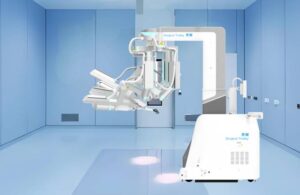
China-based Surgerii Robotics wins CE mark for single-port surgical robot
Surgerii Robotics announced on LinkedIn today that its Shurui single-port surgical robot garnered CE mark approval in Europe.

Surgerii Robotics announced on LinkedIn today that its Shurui single-port surgical robot garnered CE mark approval in Europe.
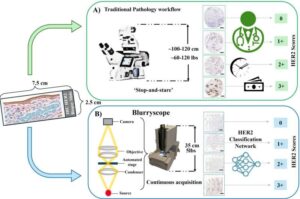
A research team at UCLA, led by Professor Aydogan Ozcan, has introduced BlurryScope, a compact, cost-effective scanning microscope that combines simple optical hardware with advanced deep learning algorithms to assess HER2 status in breast cancer tissue samples.
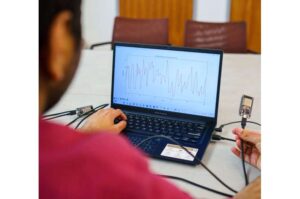
Heart rate is one of the most basic and important indicators of health, providing a snapshot into a person’s physical activity, stress and anxiety, hydration level, and more.

A research team at Saarland University has demonstrated in a clinical study that a widely used anti-allergy nasal spray containing the active ingredient azelastine can significantly reduce the risk of infection with the SARS-CoV-2 virus. The results of the placebo-controlled trial involving 450 healthy participants have now been published in JAMA Internal Medicine.
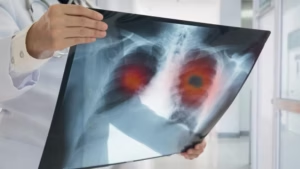
The submission for CT:VQ was supported by a clinical validation package that spanned a variety of lung conditions.
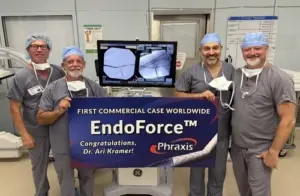
The technology is compatible with all PTFE grafts and was studied extensively in the company’s pivotal clinical trial
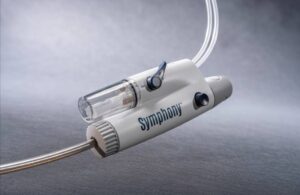
Imperative Care announced today that the FDA granted 510(k) clearance for its Symphony thrombectomy system to treat pulmonary embolism (PE).
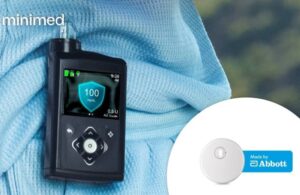
Medtronic (NYSE: MDT)+
today announced major regulatory milestones for its MiniMed 780G automated insulin delivery system.

Measurements with a miniature camera inside the coronary arteries can accurately predict whether someone will suffer a recurrent heart attack. Until now, interpreting these images was so complex that only specialized laboratories could perform it.
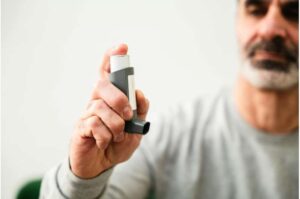
A simple blood test could make asthma treatment more precise, more effective—and potentially more affordable. Researchers from Karl Landsteiner University of Health Sciences (KL Krems) and the Medical University of Vienna (MedUni Vienna) have developed a molecular allergy chip that detects allergic asthma in individual patients.