

Butterfly Network strikes US first with POCUS gestational age tool clearance
Butterfly’s GA tool within its point-of-care ultrasound (POCUS) system is intended for rollout in regions with socioeconomic barriers to obstetric imaging services.

FDA approves Anumana’s pulmonary hypertension algorithm
The algorithm integrates with EHR systems and ECG platforms, operating within the health system without external data transfer.

Haemonetics Receives FDA Approval for Expanded Labeling of the VASCADE MVP® XL Venous Vascular Closure System
BOSTON, March 30, 2026 /PRNewswire/ — Haemonetics Corporation (NYSE: HAE), a global medical technology company focused on delivering innovative solutions designed to improve patient outcomes, today announced U.S. Food and Drug Administration (FDA) approval to expand the labeling for the VASCADE MVP® XL venous vascular closure system to include procedures using 10-14F inner diameter (ID) and up to 17F outer diameter (OD) procedural sheaths. With this label expansion, the VASCADE MVP XL system is approved for larger sheaths used in market-leading technologies for pulsed field ablation (PFA) and left atrial appendage closure (LAAC) to treat atrial fibrillation.
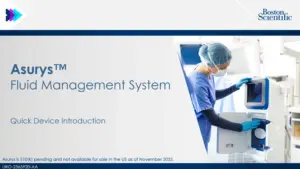
Boston Scientific receives FDA clearance for the Asurys™ Fluid Management System
New technology designed to provide a single irrigation management system for ureteroscopy, cystoscopy, percutaneous nephrolithotomy (PCNL) and benign prostatic hyperplasia (BPH) procedures

4DMedical receives CE Mark for CT:VQ™, enabling commercial launch across the European Union
4DMedical Limited (ASX:4DX), the global leader in cardiothoracic imaging software, announces that its latest imaging technology, CT:VQ™ has received CE Mark certification for commercial use in the European Union.
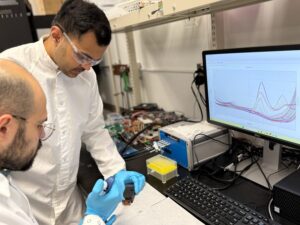
‘Smart’ bandage tracks wound status in real-time
Penn State researchers have developed a portable, electronic sensor system that can monitor multiple biomarkers in wounds and detect early signs of infection or inflammation before symptoms worsen, and potentially before visible symptoms appear.
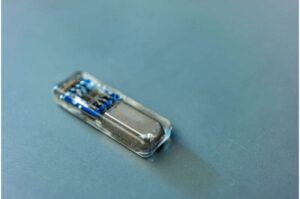
Solving the oxygen problem in cell-based drug delivery
Researchers at Rice University and collaborators at Carnegie Mellon University and Northwestern University have now successfully integrated solutions to several persistent challenges to implantable drug factories into a single device.
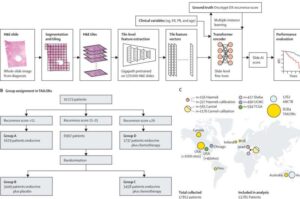
AI model can predict chemotherapy benefit in breast cancer
Researchers from the Technion—Israel Institute of Technology, together with collaborators from leading medical centers in the United States and Europe, have developed an artificial intelligence (AI) model that predicts both the risk of breast cancer recurrence and the likelihood that a patient will benefit from chemotherapy.