
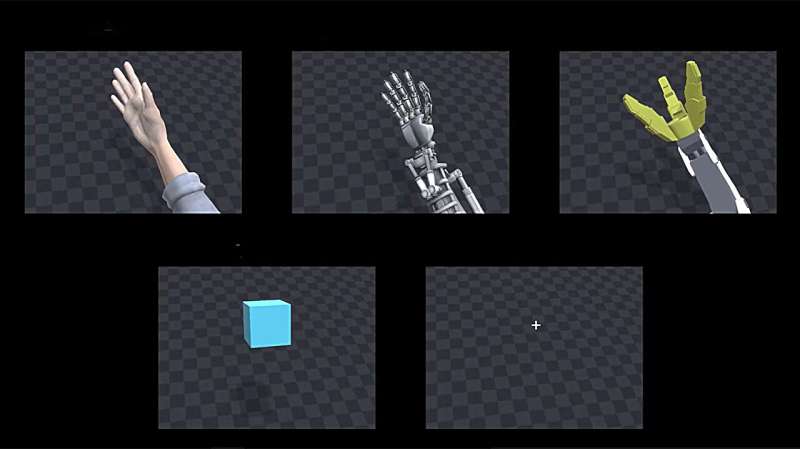
Now, neuroscientists have uncovered new insights into how this observational motor activity works. In a study that recorded the activity of individual neurons as people watched hand-like agents perform actions, the research team found that observational activity is tied to how humanlike the hand performing the action appears to be.
Actions performed by realistic-looking hands elicited the strongest observational response, while robotic hands or more abstract representations were associated with proportionally weaker responses.