
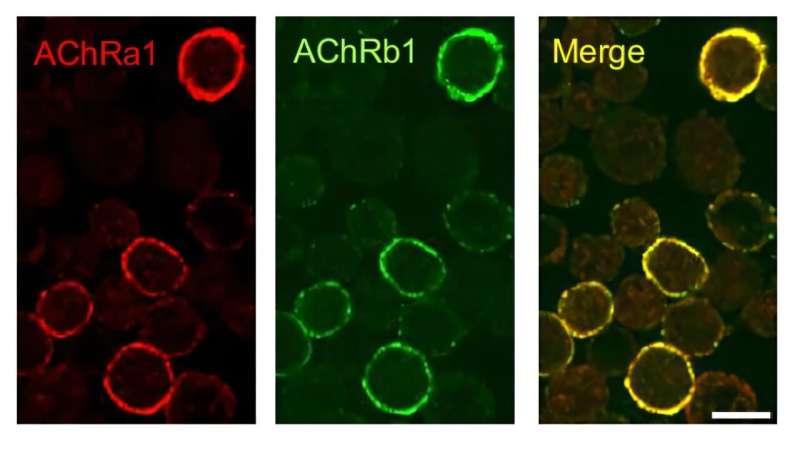
The team led by Prof. Harald Prüß aims to translate these findings into clinical trials and, ultimately, therapies for humans. Currently, this development is still at the laboratory stage.
The results on the neuromuscular autoimmune disorder “myasthenia gravis” were published in Nature Communications.
Previously, the researchers had already tested their approach in “anti-NMDA receptor encephalitis.”
“Neurological autoimmune diseases” encompass a group of conditions with a wide range of symptoms in which the immune system attacks the body’s own nervous system. In these diseases, white blood cells from the B-cell family produce so-called autoantibodies that bind to the body’s own cells—specifically, certain proteins on the cell surface.