New AI system could accelerate clinical research
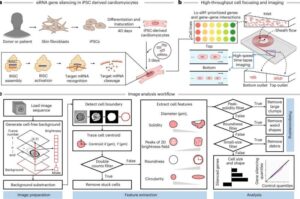
By enabling rapid annotation of areas of interest in medical images, the tool can help scientists study new treatments or map disease progression.

By enabling rapid annotation of areas of interest in medical images, the tool can help scientists study new treatments or map disease progression.

New machine learning models developed by University of South Australia (UniSA) researchers could help clinicians identify when patients can successfully stop long-term antidepressant use.

One of the first randomized controlled trials assessing the effectiveness of a large language model (LLM) chatbot known as “Amanda” for relationship support shows that a single session of chatbot therapy can be as beneficial as evidence-based journaling in assisting with relationship conflict resolution.

As a wound heals, it goes through several stages: clotting to stop bleeding, immune system response, scabbing, and scarring. A wearable device called “a-Heal,” designed by engineers at the University of California, Santa Cruz, aims to optimize each stage of the process.

The expanded clearance extends BioTraceIO360 beyond liver applications to kidney procedures, advancing Techsomed’s vision of a multi-organ, AI-driven image-guided therapy platform that standardises minimally invasive cancer care.

Researchers at Dana-Farber Cancer Institute have developed a diagnostic tool that could transform the way acute leukemia is identified and treated. The tool, called MARLIN (Methylation- and AI-guided Rapid Leukemia Subtype Inference), uses DNA methylation patterns and machine learning to classify acute leukemia with speed and accuracy

Scientists have developed and tested a deep-learning model that could support clinicians by providing accurate results and clear, explainable insights—including a model-estimated probability score for autism.

A new artificial intelligence model found previously undetected signals in routine heart tests that strongly predict which patients will suffer potentially deadly complications after surgery. The model significantly outperformed risk scores currently relied upon by doctors.

University of Massachusetts Amherst researchers and scientists at Embr Labs, a Boston-based start-up, have developed an AI-driven algorithm that can accurately predict nearly 70% of hot flashes before they’re perceived.

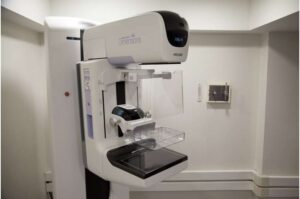
A project at Lund University in Sweden has trained an AI model to identify breast cancer patients who could be spared from axillary surgery. The model analyzes previously unutilized information in mammograms and pinpoints with high accuracy the individual risk of metastasis in the armpit.