Beacon Biosignals is mapping the brain during sleep
Founded by Jake Donoghue PhD ’19 and former MIT researcher Jarrett Revels, the company is creating an AI-driven platform to help diagnose and treat disease.

An anonymous gift helped Tufts researchers speed up a project to develop new drugs that could prevent and treat Lyme disease

For the first time, researchers have used an advanced AI model that understands both images and language, allowing them to model dyslexia, paving the way for potential new treatments.

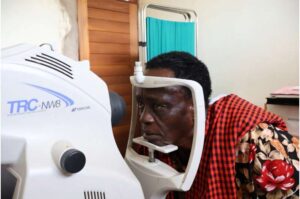
A research group led by Professor Toru Nakazawa at the Tohoku University Graduate School of Medicine has developed an artificial intelligence (AI) model that estimates “retinal age,” an indicator reflecting an individual’s biological aging, from a single fundus photograph of the retina

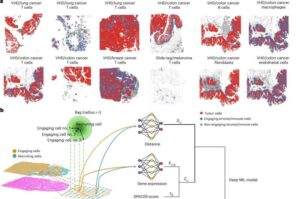
A research team led by The Hong Kong University of Science and Technology (HKUST) has developed a pioneering artificial intelligence (AI) pathology analysis system that can accurately recognize multiple types of cancer using only a minimal number of samples.

Together with a team from the University of Luxembourg, researchers from Heinrich Heine University Düsseldorf (HHU) and University Hospital Düsseldorf (UKD) have succeeded in utilizing artificial intelligence (AI) to establish a model that enables a better understanding of Leigh syndrome.

AI will soon enable clinicians to predict ovulation and optimize IVF cycle timing, improving outcomes and operational efficiency.

McGill University researchers have developed an artificial intelligence tool that can identify small groups of cells most responsible for driving aggressive cancers.

By using AI to analyze more than 400,000 Reddit posts, Penn researchers have identified patient-reported symptoms associated with GLP-1s, the popular weight-loss and diabetes drugs semaglutide and tirzepatide, that may not be fully captured in clinical trials or regulatory documents.

Cardiovascular diseases remain the leading cause of death worldwide, accounting for nearly 20 million deaths each year. Rapid diagnosis and risk assessment of cardiac injury are therefore essential for improving patient outcomes.