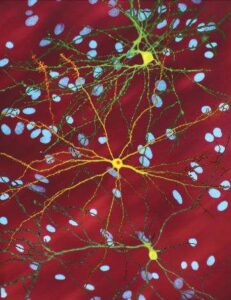
UK scientists slow Huntington’s disease for first time
UK researchers said Wednesday they had slowed the progression of the fatal neural condition Huntington’s disease for the first time with a groundbreaking new gene therapy.

UK researchers said Wednesday they had slowed the progression of the fatal neural condition Huntington’s disease for the first time with a groundbreaking new gene therapy.
The study introduced LIME-seq, a new non-invasive technique capable of detecting RNA modifications at a detailed level across different RNA types.

SAN FRANCISCO, Sept. 23, 2025 /PRNewswire/ — Bunkerhill Health today announced it has received U.S. Food and Drug Administration (FDA) clearance for ECG-EF, an artificial intelligence algorithm that detects reduced left ventricular ejection fraction (LVEF), a key indicator of heart failure, using data from routine 12-lead electrocardiograms (ECGs).
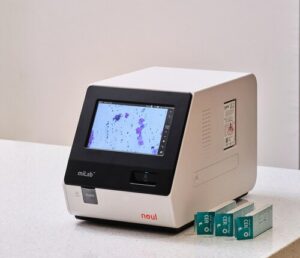
YONGIN, South Korea, Sept. 23, 2025 /PRNewswire/ — Noul Co., Ltd. (CEO: David Lim), a medical AI company specializing in blood and cancer diagnostics, announced that FDA registration has been completed for its cervical cancer diagnostic cartridge miLab™ Cartridge CER and clearing agent SafeFix™ CER, both core components of the company’s cervical cancer diagnostic solution miLab™ CER.

The expanded clearance extends BioTraceIO360 beyond liver applications to kidney procedures, advancing Techsomed’s vision of a multi-organ, AI-driven image-guided therapy platform that standardises minimally invasive cancer care.
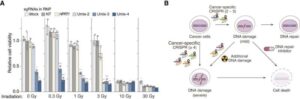
Researchers from the Department of Biomedical Engineering at UNIST and the Center for Genomic Integrity at the Institute for Basic Science (IBS) have announced an advance in cancer gene therapy.
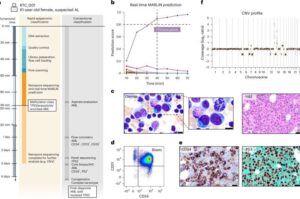
Researchers at Dana-Farber Cancer Institute have developed a diagnostic tool that could transform the way acute leukemia is identified and treated. The tool, called MARLIN (Methylation- and AI-guided Rapid Leukemia Subtype Inference), uses DNA methylation patterns and machine learning to classify acute leukemia with speed and accuracy

In a new study that combines synthetic biology with cancer immunotherapy, researchers from the Yong Loo Lin School of Medicine, National University of Singapore (NUS Medicine) and Central South University in China have developed an engineered strain of gut-homing bacteria that stimulates potent antitumor immune responses against colorectal cancer (CRC).
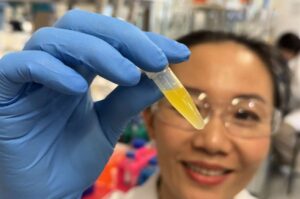
A new eyedrop has shown early success in delivering protective compounds to where they’re needed most in the eye, raising hopes for less invasive treatment of serious vision conditions.

The INTREPID study group, a team of 49 researchers from 30 academic and medical institutions, reports on sustained five-year benefits from subthalamic nucleus deep brain stimulation for Parkinson’s disease. They find improved motor function and daily living activities with a 28% reduction in anti-Parkinson’s medication.