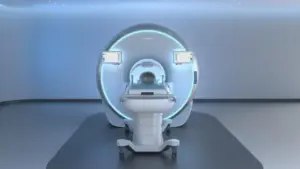
Philips unveils BlueSeal Horizon helium-free 3.0T MRI platform
Major technology breakthrough combines advanced AI for clinical insights and accelerated workflow in new premium 3.0T MRI platform

Major technology breakthrough combines advanced AI for clinical insights and accelerated workflow in new premium 3.0T MRI platform

NervGen will meet with the FDA early next year to align on a regulatory path forward for NVG-291 in chronic spinal cord injury.
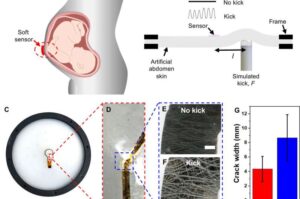
Engineers and obstetricians at Monash University have invented a wearable Band-Aid-like patch to track a baby’s movements through the mother’s abdomen, offering a new way to support safer pregnancies from home.

As many as one in six teenagers have self-harmed at some point in their lives. As well as being an indicator of emotional pain, self-harm is also the best-known predictor of death by suicide—yet researchers know little about the emotional and biological factors that lead to it.
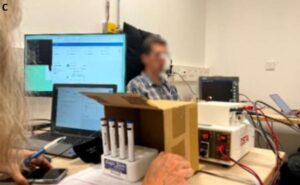
There is new hope for people who have lost their smell. Scientists have successfully tested a breakthrough device that lets people detect the presence of certain odors. This innovative system helps them “smell” again by translating odors into feelings (like touch) inside the nose.
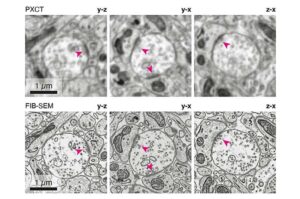
An international team of researchers led by the Francis Crick Institute, working with the Paul Scherrer Institute, has developed a new imaging protocol to capture mouse brain cell connections in precise detail. In work published in Nature Methods, they combined the use of X-rays with radiation-resistant materials sourced from the aerospace industry.
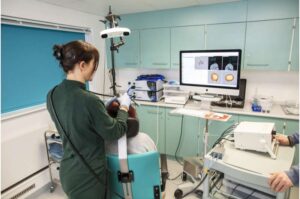
The nucleus accumbens is a tiny element of the human brain triggered when we experience something enjoyable, and used to help us learn behaviors that lead to rewards. A new study has shown for the first time that its influence on human behavior can be altered using transcranial ultrasound stimulation (TUS).
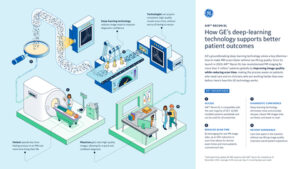
GE HealthCare’s Recon DL is claimed to be the first mammography technology to use deep learning alongside iterative reconstruction to improve image quality.
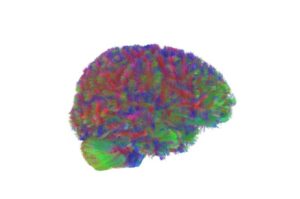
Neuroscientists at the University of Cambridge have identified five “major epochs” of brain structure over the course of a human life, as our brains rewire to support different ways of thinking while we grow, mature, and ultimately decline.

A simple neck scan can identify men with double the risk of heart failure, according to research led by University College London.