Rapid bedside test predicts sepsis with more than 90% accuracy
Canadian scientists have developed a blood test and portable device that can determine the onset of sepsis faster and more accurately than existing methods.

Canadian scientists have developed a blood test and portable device that can determine the onset of sepsis faster and more accurately than existing methods.

A research team affiliated with UNIST has unveiled a novel extracorporeal blood purification technology that captures and removes bacteria from the bloodstream by leveraging sticky, clot-like surfaces. This breakthrough could pave the way for new treatments against deadly systemic infections, including sepsis, even those caused by antibiotic-resistant bacteria. The work is published in Advanced Science.

Scientists at the Mind, Brain, and Behavior Research Center at the University of Granada (CIMCYC) have revealed how, when faced with highly appetizing and unhealthy food stimuli, many overweight people or those prone to binge eating keep their impulsive system hyperactive, while their reflective or conscious thinking system takes a back seat.

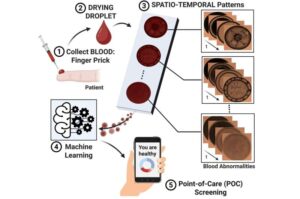
Researchers have developed a first-of-its-kind device to profile the immune function of newborns. Using a single drop of blood, the BiophysicaL Immune Profiling for Infants (BLIPI) system provides real-time insights into newborns’ immune responses, enabling the early detection of severe inflammatory conditions and allowing for timely interventions.

It took Glenn Calverley a while to figure out he was having a stroke. It just felt like a really bad headache that wouldn’t go away. But then he noticed his vision had changed dramatically and he knew something was seriously wrong.

3D tissue engineering, which recently has undergone other major advances in speed and accuracy, helps biomedical researchers design and test therapies for a range of diseases.

Wearable technologies are revolutionizing health care, but design limitations in adhesive-based personal monitors have kept them from meeting their full potential

Align Technology’s non-invasive orthodontic innovation set to transform pediatric care in China.

Researchers from the Keck School of Medicine of USC have developed a blood test that can identify early signs of Alzheimer’s disease by measuring proteins linked to the condition. The new test, known as Penta-Plex Alzheimer’s Disease Capture Sandwich Immunoassay (5ADCSI), detects five biomarkers simultaneously, which is more than existing blood tests and runs on equipment commonly used in many laboratories.

Successfully treating type 2 diabetes may involve focusing on brain neurons, rather than simply concentrating on obesity or insulin resistance, according to a study published today in the Journal of Clinical Investigation.