
Renu MedTech introduces tubeless insulin patch pump in India
Renu MedTech today unveiled InsuPatch, its tubeless insulin patch pump designed specifically for advancing diabetes care in India.

Renu MedTech today unveiled InsuPatch, its tubeless insulin patch pump designed specifically for advancing diabetes care in India.
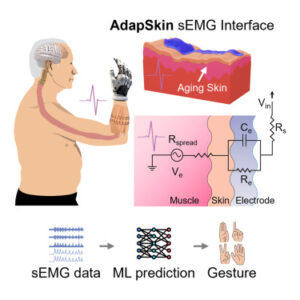
Skin-interfaced bioelectronics can help enhance health monitoring and early disease prediction. However, biomechanical and compositional differences in skin, such as dryness, wrinkling, and thinning due to the loss of collagen, can alter skin electrical impedance and conductance, compromising the functionalities of these devices.

NIRIT, Israel, Nov. 13, 2025 /PRNewswire/ — Smart Sound Ltd., a cochlear implant innovator, announces publication of a U.S. Patent for a “Hidden Cochlear Implant System with an In-Canal Wireless Transmission,” a novel cochlear implant design fundamentally change the industry by providing a fully discreet, magnet-free and improving users quality of life.
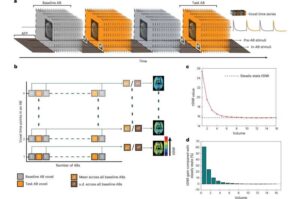
In every functional MRI scan, after the whir and pounding begins, there is a brief 10 to 20 seconds of stabilization as the machine’s magnetic field settles into place. For decades, scientists have treated this period as dead time, discarding the data or “dummy scans.”
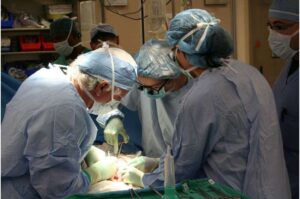
There are more candidates on the waitlist for a liver transplant than there are available organs, yet about half the time a match is found with a donor who dies after cardiac arrest following the removal of life support, the transplant must be canceled.
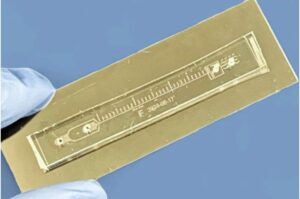
Pinned between the stomach and spine, the pancreas supervises both digestion and blood sugar in the body. It’s also the site of an aggressive cancer called pancreatic ductal adenocarcinoma, or PDAC.
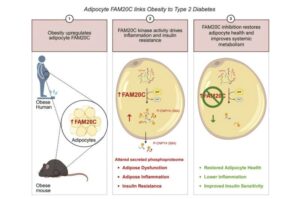
Weill Cornell Medicine investigators have identified an early step in a cellular process that leads to inflammation in fat cells and may result in type 2 diabetes in people with obesity.
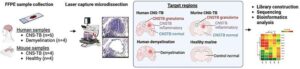
Researchers at the Yong Loo Lin School of Medicine, National University of Singapore (NUS Medicine), have demonstrated that doxycycline, a commonly available and inexpensive antibiotic, can improve survival rates and neurological outcomes in central nervous system tuberculosis (CNS-TB) in a preclinical non-human study.
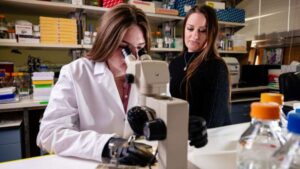
Researchers at Texas A&M University have uncovered a key element of joint cartilage regrowth, which brings them one step closer to regrowing human limbs.
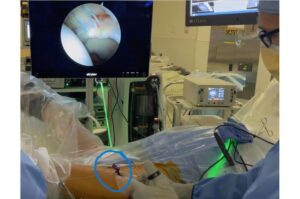
There’s a new tool in the hands of surgeons making waves in the world of hip arthroscopy.