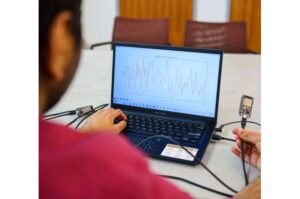
WiFi signals can measure heart rate—no wearables needed
Heart rate is one of the most basic and important indicators of health, providing a snapshot into a person’s physical activity, stress and anxiety, hydration level, and more.

Heart rate is one of the most basic and important indicators of health, providing a snapshot into a person’s physical activity, stress and anxiety, hydration level, and more.

A research team at Saarland University has demonstrated in a clinical study that a widely used anti-allergy nasal spray containing the active ingredient azelastine can significantly reduce the risk of infection with the SARS-CoV-2 virus. The results of the placebo-controlled trial involving 450 healthy participants have now been published in JAMA Internal Medicine.

Measurements with a miniature camera inside the coronary arteries can accurately predict whether someone will suffer a recurrent heart attack. Until now, interpreting these images was so complex that only specialized laboratories could perform it.

A simple blood test could make asthma treatment more precise, more effective—and potentially more affordable. Researchers from Karl Landsteiner University of Health Sciences (KL Krems) and the Medical University of Vienna (MedUni Vienna) have developed a molecular allergy chip that detects allergic asthma in individual patients.
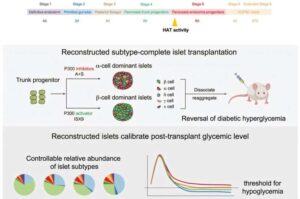
Professor Deng Hongkui’s team from the Peking University School of Life Sciences has made the first successful differentiation of human pluripotent stem cells into fully endocrine-subtype-complete islets.
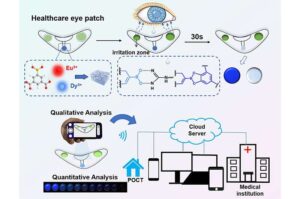
A research team has used multi-emission metal organic framework hydrogel (Eu-Dy MOF gel) to construct a noninvasive wearable eye patch fluorescence sensor, combined with the color recognition function of a smartphone to analyze and monitor lysozyme in tears.
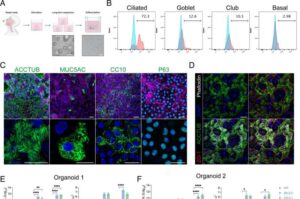
A research team has successfully developed the world’s first nasal organoid-based SARS-CoV-2 neutralizing antibody evaluation platform.
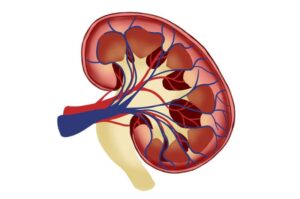
UCLA researchers have developed a new kind of immunotherapy that uses specially engineered immune cells equipped with built-in weapons to attack kidney cancer tumors and reprogram their protective environment—all without the need to customize treatment for each individual patient.
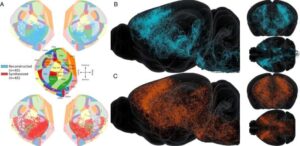
EPFL researchers have developed a powerful method to generate brain-wide, biologically realistic wiring maps of the mouse brain. Their approach bridges experimental data with mathematical and computational modeling to simulate how neurons connect across the entire brain.
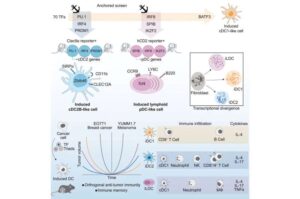
An international team led by researchers at Lund University in Sweden has identified the molecular tools needed to reprogram ordinary cells into specialized immune cells.