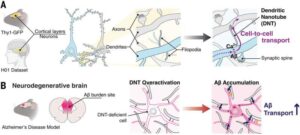
Cancer cells steal mitochondria from nerve cells in order to boost their energy
The finding opens a new path for cancer treatment.

The finding opens a new path for cancer treatment.

Researchers at Emory Goizueta Brain Health Institute and partner institutions have found new clues in the blood that could help explain why Alzheimer’s disease develops and how it affects memory.

Tumor immunotherapies, especially those leveraging T-cells to identify and eliminate cancer cells, represent a major breakthrough in cancer treatment. However, many tumor-associated antigens are not expressed at a high enough density on the cancer cell surface to effectively activate T-cells, and these antigens are often present at low levels in normal tissues, leading to poor treatment specificity and potential off-target toxic side effects.

Advance from SMART will help to better identify disease markers and develop targeted therapies and personalized treatment for diseases such as cancer and antibiotic-resistant infection.

While vaccines can be very effective for preventing viruses, like the influenza A virus (IAV), they are often strain-specific and prone to viral escape mutations. IAV alone is responsible for around 500,000 deaths worldwide each year.

Multisystemic smooth muscle dysfunction syndrome (MSMDS) is a rare condition associated with stroke, aortic dissection (tearing) and death in childhood. Currently, there is no effective treatment or cure for MSMDS.

Early and accurate diagnosis of dementia remains a major challenge. Standard approaches such as MRI and PET scans can provide valuable information about brain structure and function, but they are expensive, not always accessible, and often too expensive for repeated use.

Scientists have identified a natural extract that could help boost the effectiveness of cancer drugs. The insights gained from their study may help formulate new combination drug therapies, using precision medicine to target and cure cancer and improve patient outcomes.

Learn more about the biological mechanism behind the tongue movement of chameleons and salamanders, which could contribute to critical technological breakthroughs.

Researchers, including those at the University of Tokyo, have made a surprising discovery hiding in people’s mouths: Inocles, giant DNA elements that had previously escaped detection. These appear to play a central role in helping bacteria adapt to the constantly changing environment of the mouth.