Capstan Medical completes first robot-assisted transcatheter mitral valve replacements
Capstan Medical today announced the first successful transcatheter mitral valve replacements using its novel implant and surgical robotics system.

Capstan Medical today announced the first successful transcatheter mitral valve replacements using its novel implant and surgical robotics system.

Phantom Neuro today announced it received FDA breakthrough device designation and Targeted Acceleration Pathway (TAP) designation for its minimally invasive neural interface Phantom X.

Vitestro today launched its Aletta autonomous robotic phlebotomy device (ARPD) that performs automated blood draws.

Inari Medical — now part of Stryker — announced that it launched its Artix thrombectomy system for arterial thrombectomies

Olympus announced that it launched a new hemostasis clip to meet the needs of gastrointestinal (GI) endoscopists.

Graduate student and MathWorks Fellow Louis DeRidder is developing a device to make chemotherapy dosing more accurate for individual patients.

Johnson & Johnson MedTech‘s Shockwave Medical today announced the U.S. launch of its Javelin peripheral intravascular lithotripsy (IVL) catheter

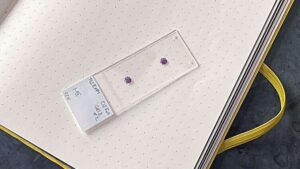
Your immune system harbors a lifetime’s worth of information about threats it’s encountered—a biological Rolodex of baddies. Often the perpetrators are viruses and bacteria you’ve conquered; others are undercover agents like vaccines given to trigger protective immune responses or even red herrings in the form of healthy tissue caught in immunological crossfire.

Researchers at the University of Jyväskylä, in collaboration with the University of Turku’s Institute of Biomedicine, University of Helsinki and Nova Hospital of Central Finland, have developed an advanced artificial intelligence tool for automatic analysis of colorectal cancer tissue slides.

The lab of Filippo Veglia, Ph.D., at The Wistar Institute has discovered a previously unknown mechanism for how aggressive brain cancers reprogram immune system cells from fighting cancer to enabling further tumor growth. The team’s findings were published in the paper “Functional reprogramming of neutrophils within the brain tumor microenvironment by hypoxia-driven histone lactylation,” from Cancer Discovery.