
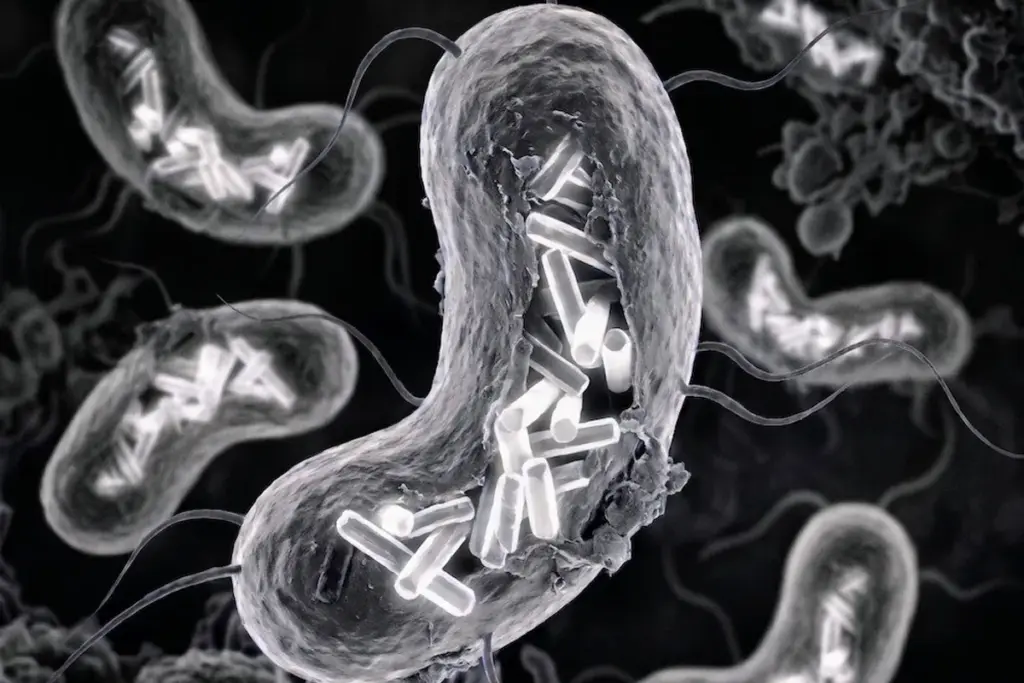
Commonly found on the surface of teeth and in saliva, it’s a sign of a healthy oral microbiome, as it can suppress the growth of Streptococcus mutans — the primary bacterium responsible for tooth decay and cavities — by secreting hydrogen peroxide.
But taking a closer look at S. sanguinis, something else is often covertly embedded inside it. This elusive entity is called an “obelisk,” and it’s an expert at hijacking, latching onto S. sanguinis and inserting genetic instructions into the bacterium to replicate. First discovered in 2024, this infectious stranger is made entirely of RNA that organizes itself into a rod-like shape. And despite sharing a few notable similarities with viruses, it isn’t a virus at all.