
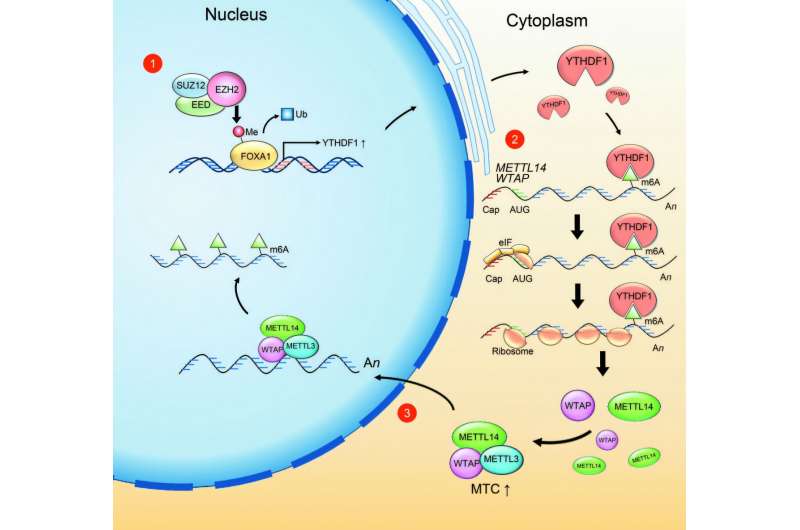
Investigators found that EZH2, a protein long recognized for its role in gene regulation, also influences m6A, the most common chemical RNA modification in humans.
This modification acts like a molecular “switch,” controlling how genes are expressed and proteins are made. While m6A has been linked to cancer progression, the exact mechanisms behind its regulation remained unclear, said Yang Yi, Ph.D., assistant professor of Urology, who was the first author of the study.
“We have a long-term interest in the potential crosstalk between different kinds of epigenetic regulation types, especially the interplay between EZH2-mediated modification,” Yi said. “We initiated this project to study how EZH2 promotes cancer progression through targeting this m6A modification.”