
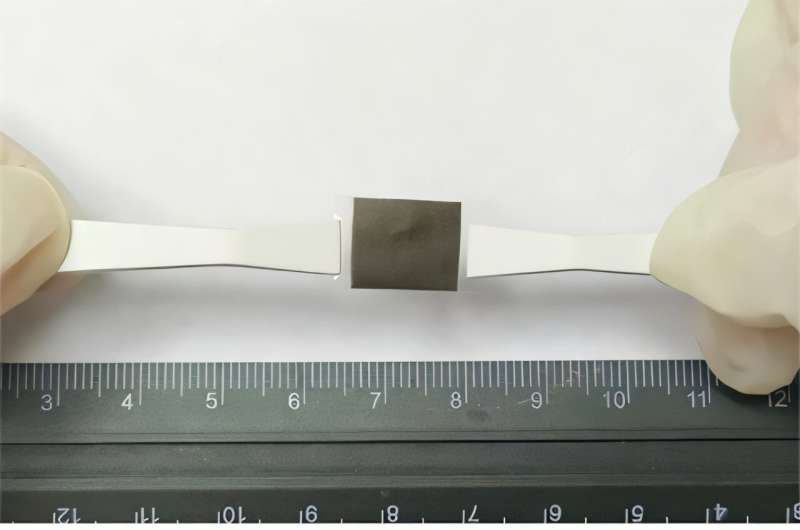
Melanomas typically form in the outermost and middle layers of the skin. That makes it challenging to kill cancer cells while leaving the surrounding healthy tissue unscathed. Recent advancements in nanotechnology could result in a gentler, more targeted option for skin cancer therapy. One example is laser-induced graphene (a laser-etched porous carbon material). Researchers Xin Li, Shi Chen, Meijia Gu and Ruquan Ye took this material and filled the pores with copper(II) oxide and embedded it in a stretchy silicone polymer to create a skin patch for targeted melanoma therapy.
On its own, the patch is soft, stretchy, breathable on the skin, and chemically inert. But the researchers hypothesized that by gently heating the patch, it would release copper ions that interact with cancer cells’ DNA and kill them through oxidative stress. This pathway should also trigger an immune response that would inhibit tumor cell migration into other parts of the body (metastasis).