
“Melanoma originates from melanocytes located within the epidermal environment, where tumor cells are surrounded by and continuously communicate with keratinocytes. However, most studies of the melanoma microenvironment have focused on immune cells, fibroblasts, and vascular cells, while the contribution of neighboring epidermal keratinocytes has received comparatively less attention,” said Dr. Quan Sun, the paper’s first author, about the motivation behind the study.
Keratinocytes lose a local defense
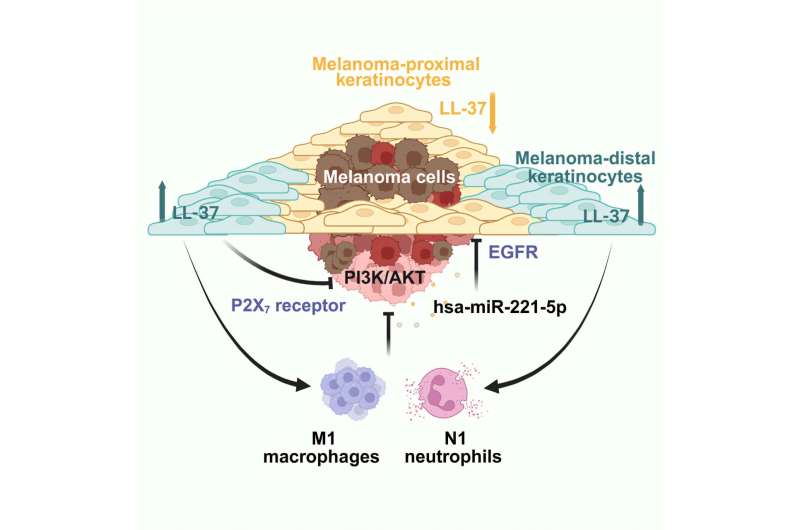
They analyzed human melanoma specimens. LL-37, a protective antimicrobial peptide produced by keratinocytes, was found to be selectively reduced in keratinocytes immediately surrounding melanoma cells, while it was found at normal levels in areas farther from the tumor.