
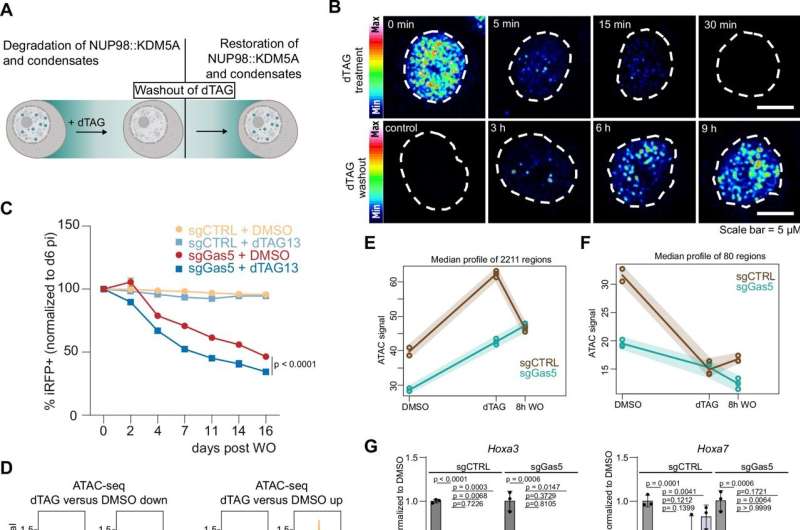
Using this method, the Vienna-based research team identified the RNA molecule Gas5 as an important regulator of NUP98::KDM5A oncogenic condensates, which control gene activity in aggressive forms of acute myeloid leukemia (AML). This new insight may provide important starting points for cancer research and improved patient treatment. The study was published in the journal The EMBO Journal.
Aggressive leukemias can be driven by so-called fusion oncoproteins. Within cells, these proteins can accumulate in biomolecular condensates—dynamic, membrane-less structures in which different biomolecules interact to influence gene activity. Until now, however, little was known about which RNA molecules are involved in these “oncocondensates.”