
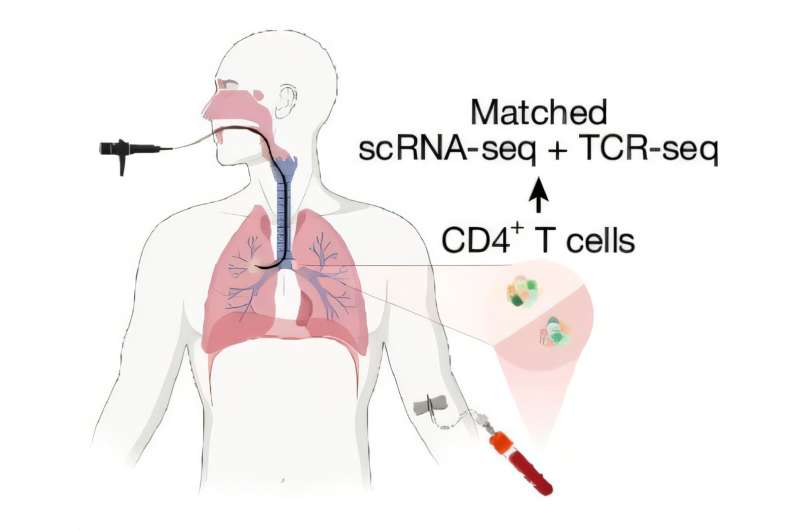
Led by associate professor James Reading and professor Sam Janes, the study published in Nature potentially opens up new ways to intercept the disease in its early, precancerous stages.
Early intervention
There are around 32,800 lung cancer deaths in the U.K. every year. Only about 1 in 10 (11.1%) people diagnosed with lung cancer are predicted to survive for 10 years or more. By the time the disease causes noticeable symptoms, and in cases of advanced cancer, it is harder to treat.
Reading, an associate professor at UCL, said, “We urgently need new ways to prevent lung cancer in people at high risk of developing the disease. There was a moment when multiple members of my team were telling me that they’d spotted the same unusual regulatory T cell activity.