
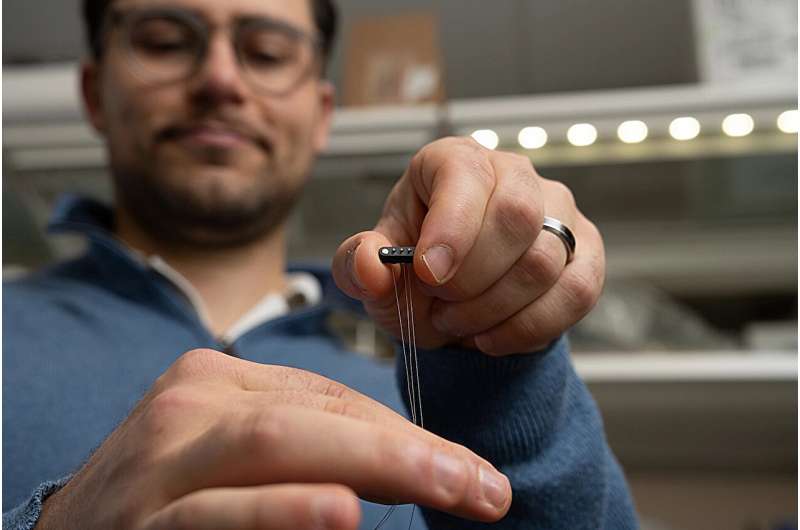
A multi-institution research team led by Carnegie Mellon University and the University of Pittsburgh has developed an implanted platform that delivers targeted electrical stimulation to severely injured muscle tissue. In work published in Acta Biomaterialia, the team showed that early, daily stimulation during the acute post-injury window helped damaged skeletal muscle regain near-normal strength, identifying a therapeutic window that had been out of reach. The research highlights several years of collaborative work on this project under the Regenerative Electronic Platform through Advanced Intelligent Regulation (REPAIR) initiative.
“These results demonstrate that early bioelectronic intervention can steer injured tissue toward repair rather than scarring,” said Tzahi Cohen-Karni professor of materials science and engineering and biomedical engineering at Carnegie Mellon, who co-led the project with Bryan Brown, professor of bioengineering at the University of Pittsburgh.