
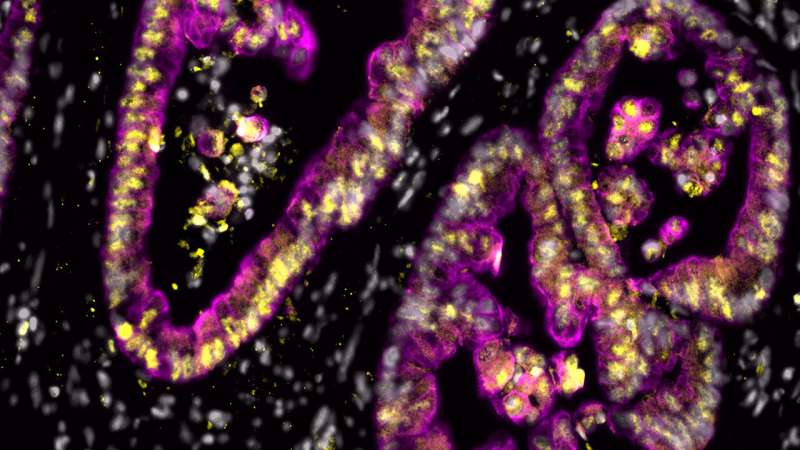
Reducing levels of IL-18 in preclinical models reshaped the tumor microenvironment, slowed tumor growth, improved survival and enhanced the effects of KRAS-targeted therapies.
The study, published in Gastroenterology, was co-led by Yang Chen, Ph.D., assistant professor of Translational Molecular Pathology, and Xinlei Sun, Ph.D., postdoctoral fellow in Translational Molecular Pathology.
“Our results show that IL-18 helps pancreatic tumors stay hidden from the immune system and significantly contributes to disease progression and reduced survival,” Chen said. “Finding a way to safely target IL-18 in humans could have tremendous potential for enhancing the benefits of KRAS-targeted therapies and improving patient outcomes.”