
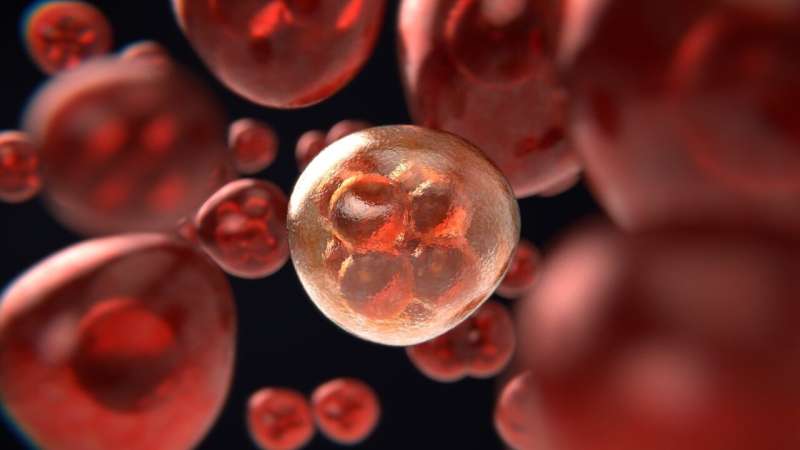
In general, getting accurate results from a cytology test depends largely on the skill of the pathologist performing it. However, in some cases, cancerous cells and normal cells can look identical, with differences occurring only at scales smaller than conventional microscopes can resolve.
These differences often involve changes in nanometric structures, such as actin filaments and microtubules that make up the internal cellular scaffolding, potentially altering how the cell scatters light.
Could machine learning-based systems detect these subtle optical differences?