
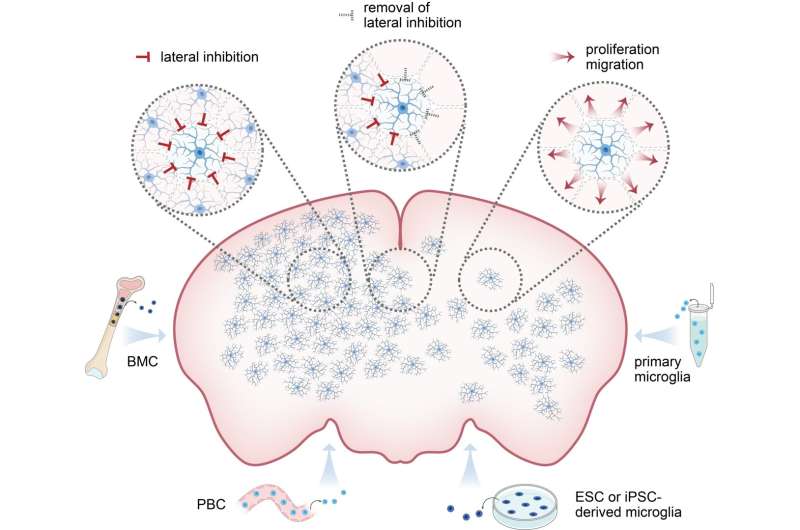
A concept to correct this by replacing the mutated microglia with genetically typical cells—now called microglia intervention strategy for therapy and enhancement by replacement, or MISTER—emerged five years ago and was successfully achieved in mice.
In 2025, researchers successfully used the approach to halt a fatal neurological disease ALSP (adult-onset leukoencephalopathy with axonal spheroids and pigmented glia) in human patients.
The team that made both achievements reflected on the work, where the field stands and what’s next. They published their Perspective review in Cell Stem Cell.