
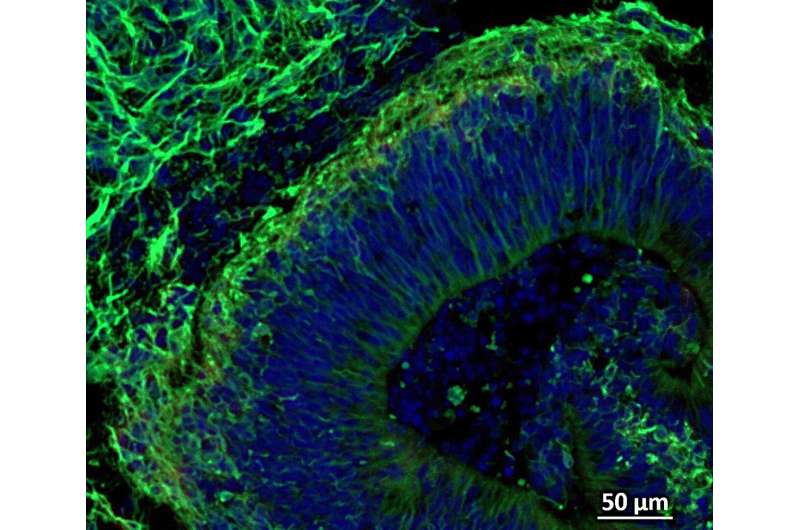
The findings, based on a study of lab-grown brain tissues known as organoids, contribute to a growing body of evidence that brain organoids may also one day be used to more precisely develop and prescribe treatments for subgroups of patients with Alzheimer’s disease, which is the most common form of dementia, and affects more than seven million Americans.
In addition, the researchers found that tiny particles, known as extracellular vesicles, which are secreted by organoids, may contain cellular information that could help scientists find new biomarkers to diagnose and stage Alzheimer’s disease. A report of the findings is published in Alzheimer’s & Dementia.