
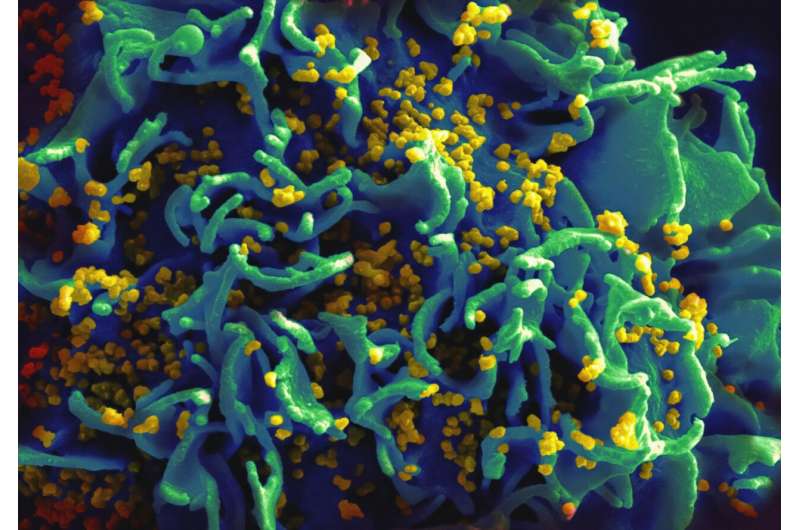
The study, published in the journal Nature, provides new insights into how the immune system can be guided towards a particularly protected part of the virus.
HIV mutates rapidly, making it difficult to develop an effective vaccine. One major challenge has been to stimulate the immune system to produce so‑called broadly neutralizing antibodies that recognize parts of the virus shared by many HIV variants.
In the study, the researchers focused on a small structure located at the very top of the virus’s surface protein, known as the apex, which is important for the protein’s three-dimensional structure. The apex is similar across many HIV variants but is shielded by dense layers of sugar molecules, making such binding difficult to achieve.