
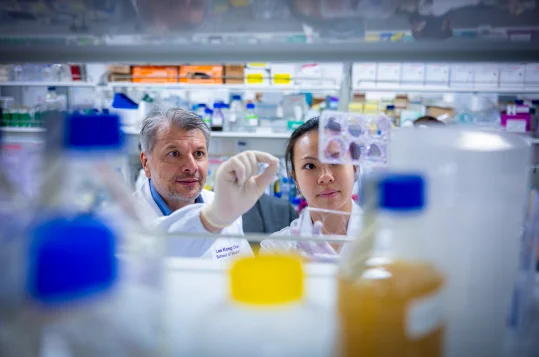
Researchers led by Nanyang Technological University, Singapore (NTU Singapore), have identified a previously unknown mechanism that enables hard-to-treat cancer cells to resist anti-cancer drugs known as PARP inhibitors.
The discovery could help inform the development of new therapeutic strategies to overcome drug resistance in certain breast and ovarian cancers.
PARP inhibitors are used to treat patients with specific types of cancer by targeting the cancer cells’ ability to repair damaged DNA. However, some tumours eventually develop resistance to these drugs. An estimated 40–70 per cent of patients with ovarian and breast cancers develop resistance to PARP inhibitors, while existing mechanisms underlying this resistance can be difficult to target therapeutically.
The international research team found that resistant cancer cells can hijack a specific DNA repair defence mechanism to protect themselves from the effects of PARP inhibitors. The mechanism involves a protein that clears DNA-damaging molecules, thereby preventing the drugs from effectively damaging the cancer cells.