
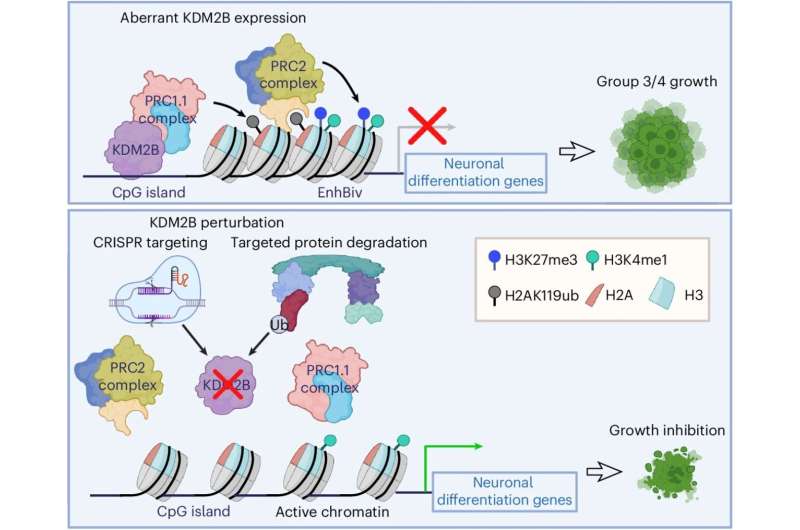
Medulloblastoma is one of the most common malignant brain tumors in children and comprises four major subgroups. Group 3 and Group 4 medulloblastomas are high-risk subgroups that lack targeted therapies. As a result, these tumors often require intensive treatments that can cause substantial long-term side effects, underscoring the need for more precise therapeutic approaches.
Although epigenetic deregulation that disrupts normal brain development is believed to drive medulloblastoma formation, the underlying mechanisms remain incompletely understood. To better understand those mechanisms and identify vulnerabilities, St. Jude and KiTZ researchers comprehensively characterized histone post-translational modifications in patient samples from every subgroup. Changes to these modifications can affect gene expression without changing DNA sequences.