
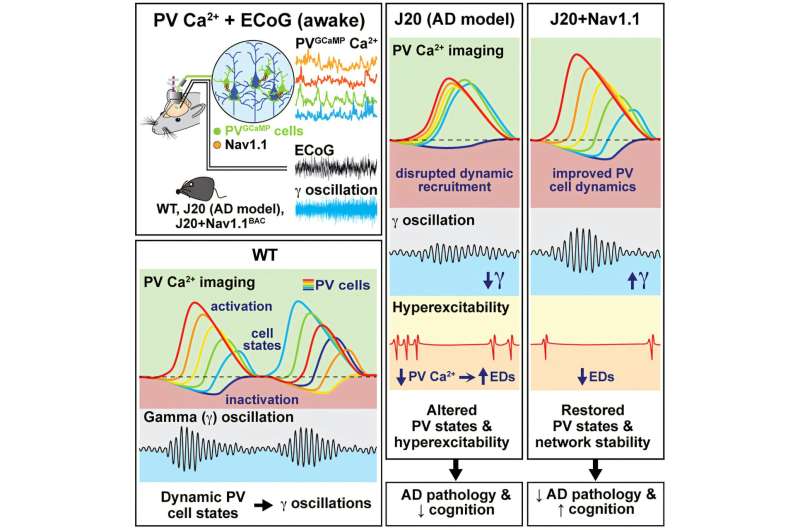
At the core of the research is the relationship between gamma oscillations and parvalbumin interneurons in the brain. Gamma oscillations are rapid electrical rhythms that occur when an individual is learning, forming memories and processing information. Parvalbumin interneurons, also referred to as PV cells, are primarily responsible for generating these gamma oscillations.
“Gamma oscillations are disrupted in the brain of Alzheimer’s patients,” said first author Keran Ma, Ph.D., assistant professor in the Department of Neurobiology and Anatomy at McGovern Medical School at UTHealth Houston.