
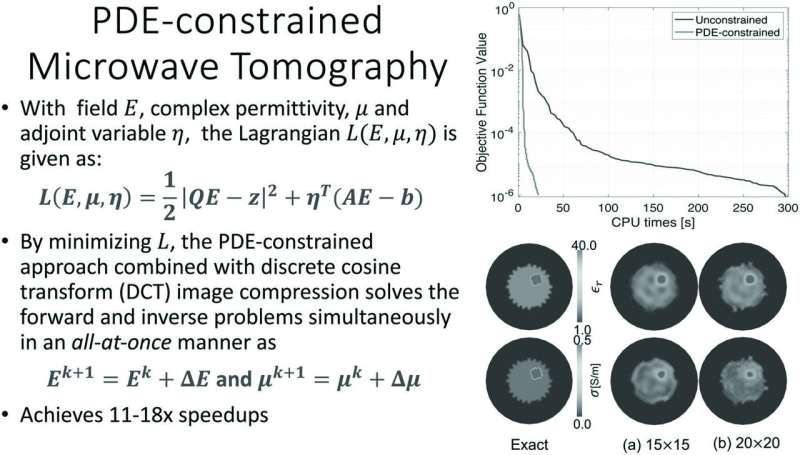
For years, scientists have imagined a different world, one in which a lightweight microwave imaging device, no bigger than a bike helmet, could allow clinicians to look inside the head without radiation, without a shielded room, and without waiting. That idea isn’t far-fetched. Microwave imaging technology already exists and can detect changes in the electrical properties of tissues—changes that happen when stroke, swelling, or tumors disrupt the brain’s normal structure.
The real obstacle has always been speed.
“The hardware can be portable,” said Stephen Kim, a Research Professor in the Department of Biomedical Engineering at NYU Tandon. “But the computations needed to turn the raw microwave data into an actual image have been far too slow. You can’t wait up to an hour to know if someone is having a hemorrhagic stroke.”