
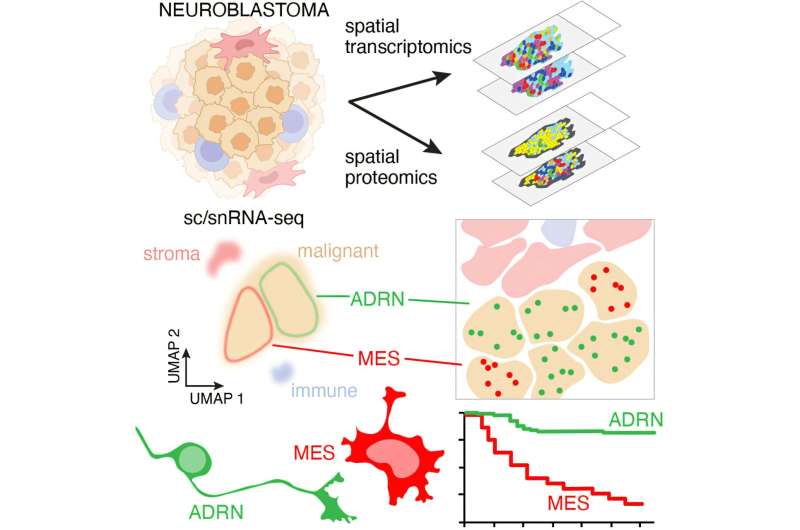
The team also created patient-derived models that capture this population, which older laboratory cell lines had missed. The findings, published today in Cancer Cell, give researchers a new framework and a set of tools to study high-risk neuroblastoma.
Neuroblastoma cells are divided into two cell states: adrenergic cells (which are associated with low-risk disease) and mesenchymal cells (which are associated with high-risk disease, treatment resistance and poor outcomes). However, directly identifying cancer-related mesenchymal cells in patient tumors has been challenging because the body also contains healthy mesenchymal cells, which can be mistaken for their malignant counterparts, complicating efforts to study them.