
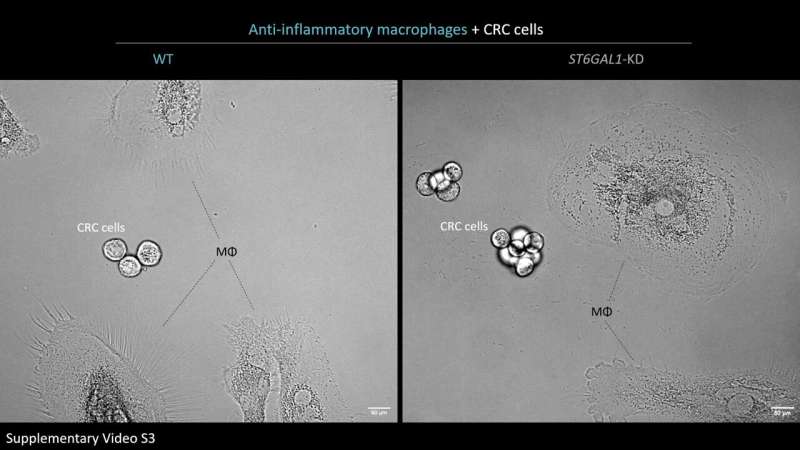
While “anti-inflammatory” sounds beneficial, in the context of cancer, it means the immune response is suppressed, allowing tumors to grow. Colorectal cancer patients with high levels of anti-inflammatory TAMs tend to have a poorer prognosis.
Researchers at Nagoya University in Japan and their colleagues found that the sialic acid sugar structures on the surface of macrophages change significantly as these cells shift from a tumor-fighting (pro-inflammatory) to a tumor-promoting (anti-inflammatory) state.
The researchers identified an enzyme called ST6GAL1 as a key driver of this change. When they suppressed ST6GAL1 in tumor-promoting macrophages, colorectal cancer cells grew much more slowly in laboratory co-cultures. This suggests that suppressing ST6GAL1 may shift these macrophages toward a tumor-fighting state, rather than helping cancer cells grow.