
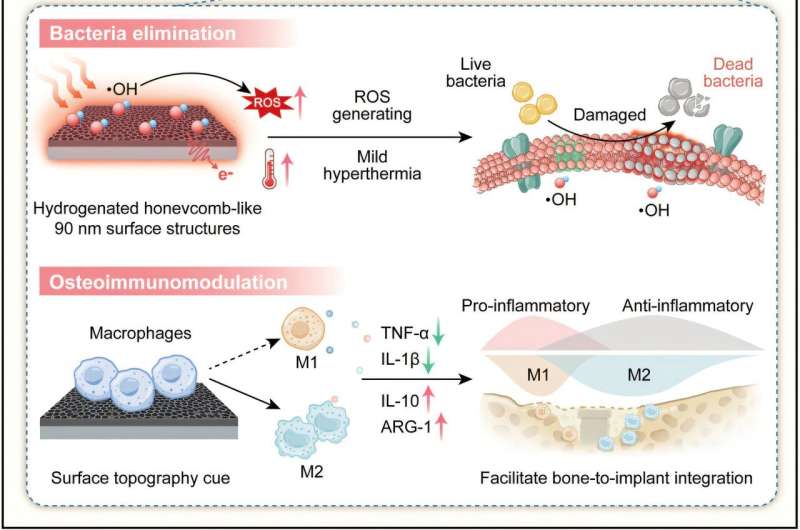
Based on titanium dioxide (TiO2), the same compound found in titanium’s natural surface oxide layer, the design may offer practical advantages for compatibility with existing titanium implants and future clinical translation. This innovative technology could be applied to various common orthopedic implants, including joint replacements, fracture fixation devices, spinal fusion cages, dental implants and craniofacial implants. It offers a new solution to combat implant infections. The findings were published as a cover story in the journal Cell Biomaterials.
Implant-associated infections remain a major clinical challenge in orthopedic practice. Once bacteria adhere to an implant surface and form biofilms, they become highly tolerant to antibiotics and can evade the patient’s immune system. Consequently, patients often require repeated invasive debridement, revision surgeries and prolonged courses of high-dose systemic antibiotics. These treatments extend recovery time, increase health care costs, contribute to antibiotic resistance and often fail to prevent recurrent infections.