
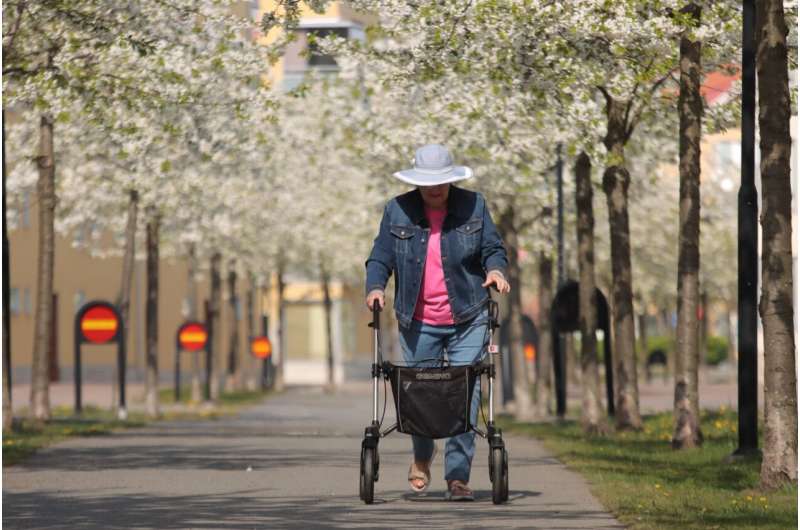
In a single-blind trial involving 30 community-dwelling older adults ages 65–80 with mild balance impairments, participants completed standardized walking assessments using both a conventional walker and the smart walker, separated by a 30-minute rest period. The smart walker featured an ergonomic aluminum frame, multidirectional wheels, adjustable handle height, continuous photoplethysmography (PPG)-based heart rate and oxygen saturation (SpO₂) monitoring, and a tilt sensor-based fall detection system capable of sending mobile alerts.
Results demonstrated that participants walked significantly faster with the smart walker (28.77 m/min vs. 18.14 m/min, P < .001) and exhibited a lower Physiological Cost Index (0.36 beats/m vs. 0.69 beats/m, P = .02), indicating greater mechanical efficiency. Dynamic balance also improved, with participants completing the Expanded Timed Up and Go (ETUG) test faster with the smart device (50.06 seconds vs. 64.47 seconds, P = .048). Fear of falling scores showed a slight numerical reduction but did not reach statistical significance.