
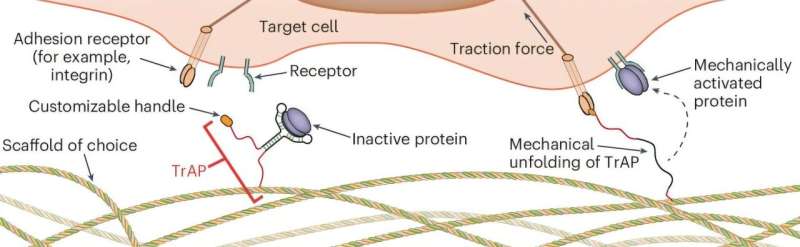
In new research published in Nature Materials, the dressings helped wounds in a mouse model close faster and improved the repair of human skin tissue in laboratory tests—the first time this mechanism has been shown to work in living, repairing tissue.
Wounds like diabetic foot ulcers, burns and traumatic injuries affect millions of people and cost the NHS billions every year. Wounds that fail to heal fully leave patients in pain and at risk of infection, putting strain on health systems.
The researchers say the approach could one day reduce the need for costly manufactured drugs by using repair molecules harvested directly from a patient’s own wounds or blood.