
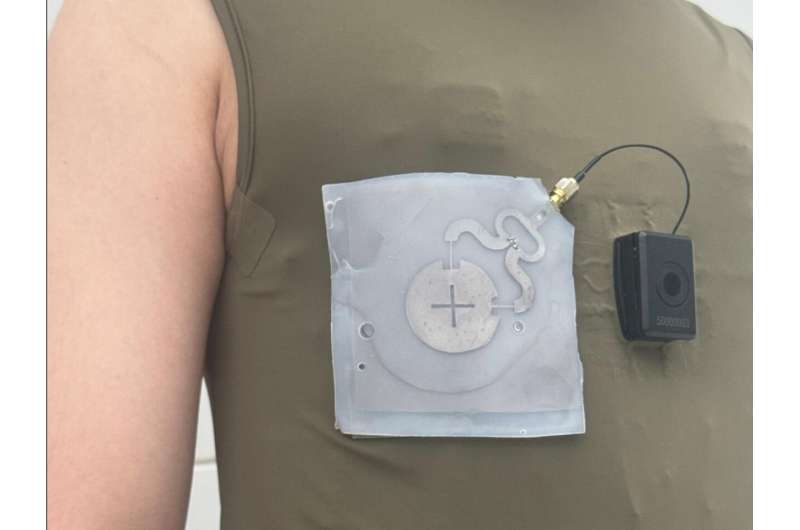
“The medical application is the top priority for us, because we see the great potential for this in monitoring human health,” said Huanyu “Larry” Cheng, the James L. Henderson Jr. Memorial Professor of Engineering Science and Mechanics at Penn State and a corresponding author of the study.
Why stretching disrupts antennas
The antenna is designed for radio frequency, or RF, communication, the broad category of wireless technology behind Bluetooth, Wi-Fi and a variety of sensors, including health monitors. Antennas not only transmit information through this wireless technology, but they can also harvest energy via RF to power a sensor or other parts of a monitoring system. Unlike a conventional rigid antenna, the new design can stretch with fabric or skin-like materials while staying close to the frequency it needs to send or receive signals or power.