
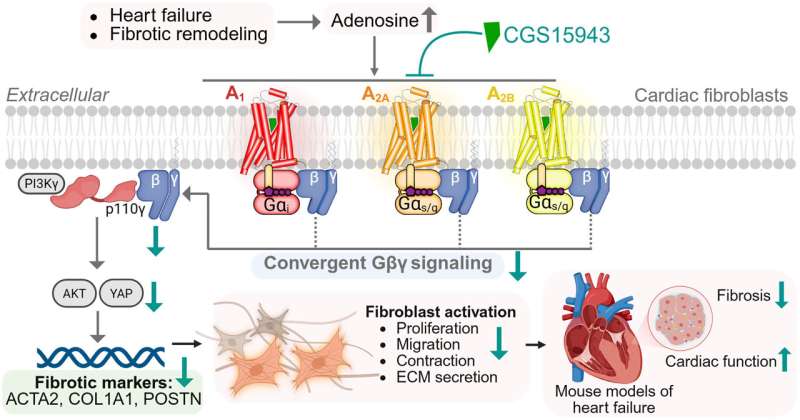
Working with collaborators at UCLA, Boston University, MD Anderson Cancer Center, the University of Arizona and Greenstone Biosciences, the team found that three receptors on the surface of heart fibroblasts converge on the same fibrosis-promoting signal. The finding was supported in human cells, engineered human heart tissue and mouse models.
Cardiac fibrosis occurs in many forms of heart disease and contributes to heart failure, but no approved therapy directly targets the scarring process.