
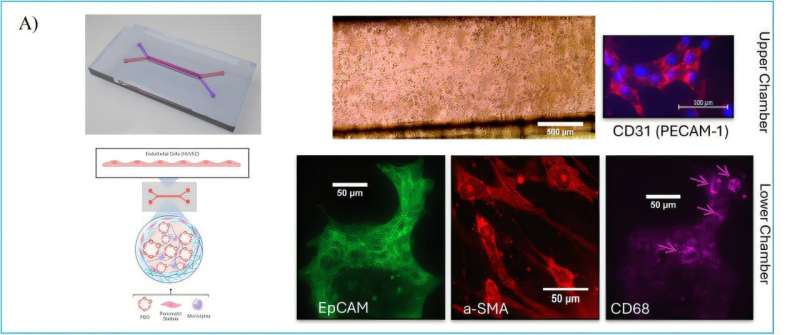
Pancreatic cancer remains one of the most difficult cancers to treat, in large part because tumors do not exist in isolation. Instead, they are surrounded by a dense and complex network of blood vessels, connective tissue, and immune cells that shape how the disease grows and responds to therapy.
Researchers began with pancreatic tumor and blood samples donated by consenting patients and used them to grow three-dimensional organoids that retain key features of the original cancer. These organoids were then placed into a microfluidic chip alongside blood vessel, stromal, and immune cells to recreate the tumor environment.