
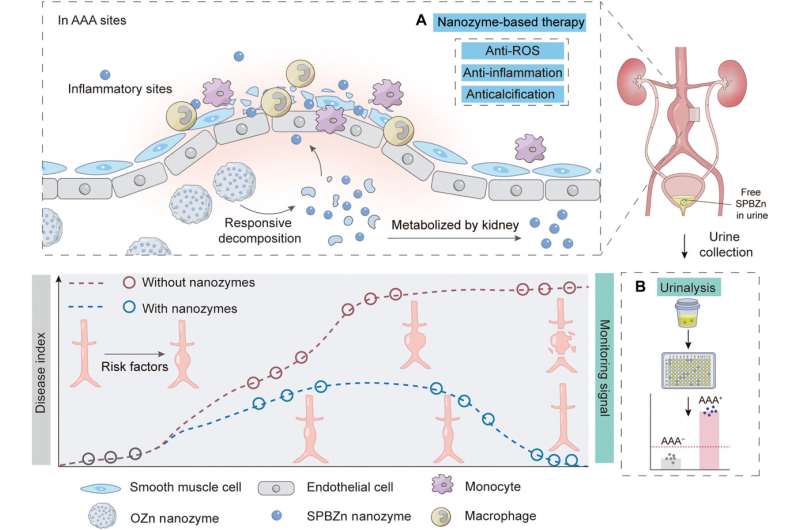
The study, published in Science Advances, demonstrates how a precision-engineered nanozyme can provide targeted intervention while simultaneously enabling noninvasive monitoring, opening a path toward a more responsive and patient-friendly clinical approach.
Understanding AAA and oxidative stress
AAA is notorious for its silent progression and devastating outcomes. Although surgical repair remains the mainstream treatment, it is invasive and unsuitable for many patients, especially those with small but unstable aneurysms.
The progression of AAA is closely tied to oxidative stress, where excessive reactive oxygen species drive inflammation, smooth muscle cell loss, matrix degradation, and ultimately vessel rupture. The absence of effective antioxidant therapies has long hindered clinical management.