
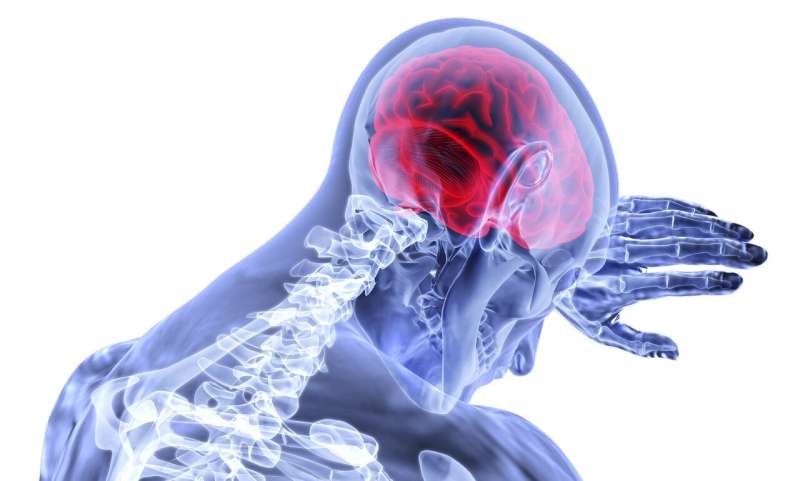
The research, published in the journal Nature Communications, was conducted by experts from the University of Plymouth’s Brain Research and Imaging Center and the University of Exeter Medical School.
They invited participants to sessions where transcranial ultrasound stimulation (TUS)—a safe low-intensity and targeted neuromodulation technique—was applied to the dorsal anterior cingulate cortex (dACC), a region of the brain implicated in those experiencing chronic pain.
During the stimulation, their right hand was placed in a cold gel to elicit pain sensations and they were asked a series of questions to rate the severity of any pain they were feeling.