
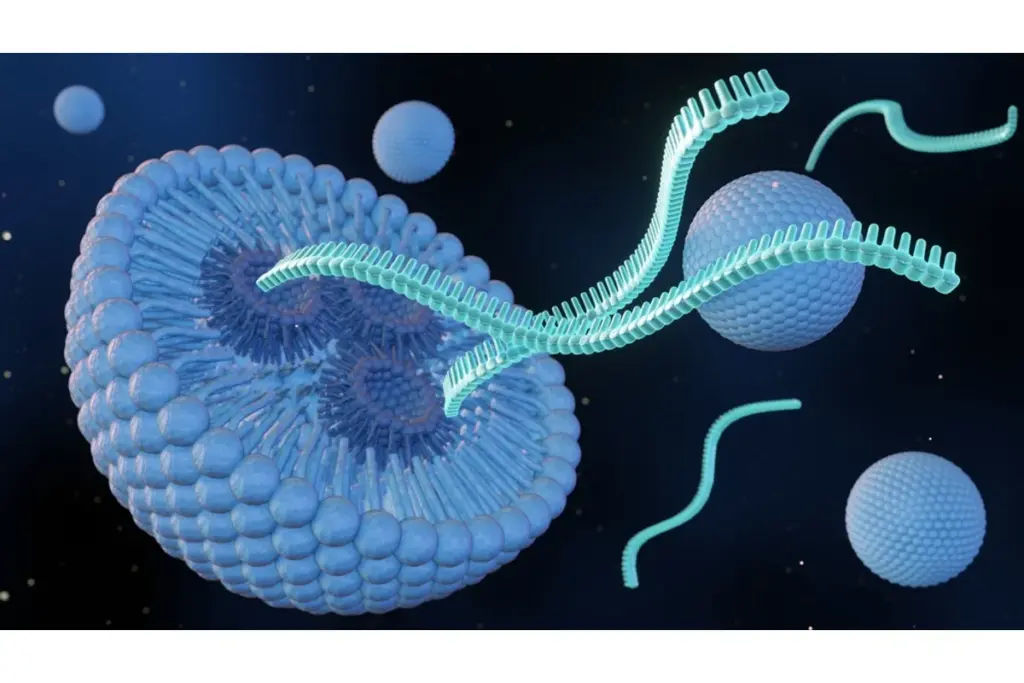
The emergence of mRNA vaccines has been an important contribution to modern medicine, and their further refinement has the potential to transform therapeutics even beyond infectious diseases. First widely introduced as the new COVID-19 vaccines during the pandemic, mRNA vaccines are now being tested globally as potential cancer treatments that train a patient’s immune system to directly target cancer cells.
To help design more effective mRNA vaccines, researchers from the Olivia Newton-John Cancer Research Institute (ONJCRI) and the Peter Doherty Institute for Infection and Immunity studied how three different COVID-19 vaccines distribute and persist within the body, as well as how they degrade, by analyzing blood samples from patients. This first-of-its-kind study, published in ACS Nano, offers insights that could help guide future cancer therapies and vaccine designs.
“mRNA vaccines do not all behave the same way in the bloodstream,” said senior study author Yi Ju, laboratory lead at ONJCRI, …