
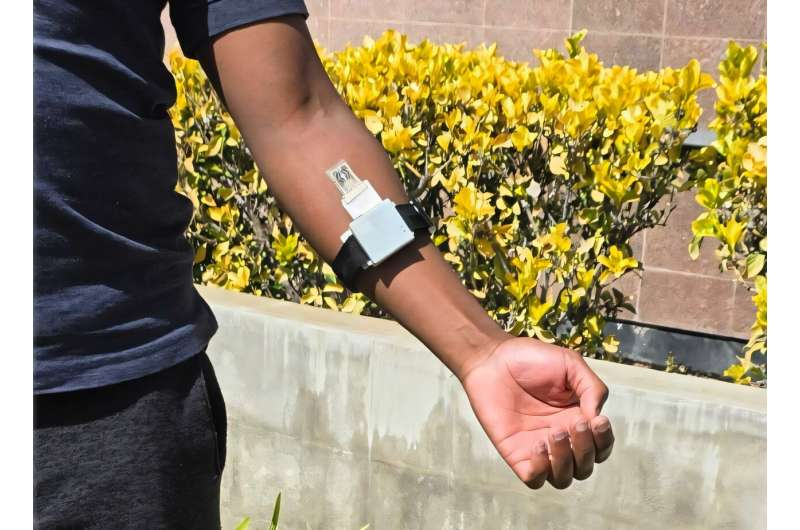
According to Rahim Esfandyar-pour, senior author of the study and assistant professor of electrical engineering and computer science, the standout features of the invention include its ability to regenerate sweat-sensing surfaces, induce perspiration in wearers when needed, and operate continuously over long timespans.
“The regenerative capability of the IREM-W2MS3 addresses one of the biggest obstacles in long-term wearable biosensing, which is sensor surfaces that lose performance after repeated measurements because molecules remain bound to the sensing layer,” said Esfandyar-pour. “By being able to refresh itself, generate sweat, and be worn for long durations outside of laboratory or clinical settings, the device offers users a health monitoring platform that is robust and highly practical.”