
Olympus launches Olysense AI-powered colorectal polyp detection platform
Olympus announced today that it launched its Olysense platform with Caddie medical device software for early colorectal polyp detection.

Olympus announced today that it launched its Olysense platform with Caddie medical device software for early colorectal polyp detection.
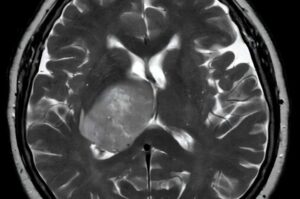
A Harvard Medical School–led research team has developed an AI tool that can reliably tell apart two look-alike cancers found in the brain but with different origins, behaviors, and treatments.
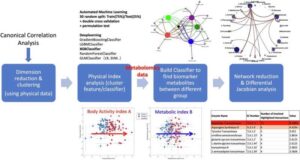
Could a simple blood test reveal how well someone is aging?

In the news release, Fluid AI Medical Receives FDA 510(k) Clearance for Origin™, a Real-Time Postoperative Bedside Monitoring Device, issued 24-Sep-2025 by Fluid AI Medical over PR Newswire, we are advised by the company that the news release has been updated.
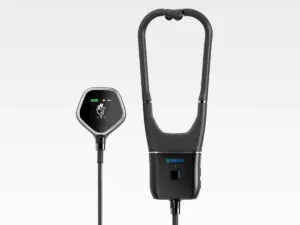
HOUSTON, Sept. 25, 2025 /PRNewswire/ — Sanolla, a leader in advanced auscultation and AI-powered diagnostic tools, is advancing clinical practice with the launch of its VoqX smart stethoscope, the first AI-powered device capable of analyzing both heart and lung sounds, now directly available to physicians.
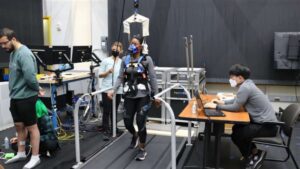
For many stroke survivors, even the smallest number of steps carries enormous weight. Each movement becomes a reminder of lost coordination, muscle weakness, and physical vulnerability.

By enabling rapid annotation of areas of interest in medical images, the tool can help scientists study new treatments or map disease progression.

New machine learning models developed by University of South Australia (UniSA) researchers could help clinicians identify when patients can successfully stop long-term antidepressant use.

One of the first randomized controlled trials assessing the effectiveness of a large language model (LLM) chatbot known as “Amanda” for relationship support shows that a single session of chatbot therapy can be as beneficial as evidence-based journaling in assisting with relationship conflict resolution.
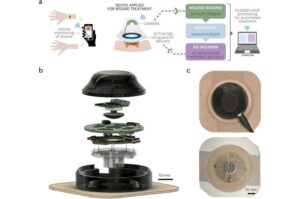
As a wound heals, it goes through several stages: clotting to stop bleeding, immune system response, scabbing, and scarring. A wearable device called “a-Heal,” designed by engineers at the University of California, Santa Cruz, aims to optimize each stage of the process.