Designing the future of metabolic health through tissue-selective drug delivery
Founded by three MIT alumni, Gensaic uses AI-guided protein design to deliver RNA and other therapeutic molecules to specific cells or areas of the body.

Founded by three MIT alumni, Gensaic uses AI-guided protein design to deliver RNA and other therapeutic molecules to specific cells or areas of the body.

MENLO PARK, Calif., Jan. 29, 2026 /PRNewswire/ — GRAIL, Inc. (Nasdaq: GRAL), a healthcare company whose mission is to detect cancer early when it can be cured, today announced the submission of the final module of the Premarket Approval (PMA) application to the U.S. Food and Drug Administration (FDA) for its Galleri® multi-cancer early detection (MCED) test. The FDA designated the test as a Breakthrough Device in 2018.

Numerous genetic studies have identified many risk variants for type 2 diabetes (T2D)—but which genes and proteins are actually involved in the disease mechanisms?

Humans can’t live without lungs, but Ankit Bharat’s patient did for 48 hours.

A team led by researchers at Chalmers University of Technology, Sweden, has succeeded in identifying biomarkers for Parkinson’s disease in its earliest stages, before extensive brain damage has occurred. The biological processes leave measurable traces in the blood, but only for a limited period.

Artificial intelligence (AI)-supported mammography identifies more cancers during screening and reduces the rate of breast cancer diagnosis by 12% in the years following, finds the first randomized controlled trial of its kind. The trial involved over 100,000 Swedish women, and its results are published in The Lancet.

Glucotrack (Nasdaq:GCTK) announced today that it received new U.S. patents for its continuous blood glucose monitoring (CBGM) platform.

Senseonics (NYSE:SENS) announced today that its Eversense 365 continuous glucose monitor (CGM) system received CE mark approval.

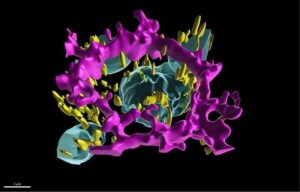
Extracellular vesicles (EVs) are tiny particles shed by cells that carry important molecular “clues” about the cell’s identity and condition.

Euan Ashley’s lab explores the intricate interactions of gene variants. Tiny “typos,” or genetic mutations, can sneak into segments of DNA. Many of these are harmless, but some can cause health problems. Two or more genes can team up and change the outcome of a physical or molecular trait. This phenomenon, known as epistasis, occurs through complex interactions between genes that are functionally related—such as those that support protein creation.