ABILITY Neurotech receives MREC approval for ALS BCI clinical trial
The clearance enables ABILITY Neurotech to move beyond intra-operative testing to long-term clinical investigation involving human participants.

The clearance enables ABILITY Neurotech to move beyond intra-operative testing to long-term clinical investigation involving human participants.

Abbott (NYSE:ABT) announced today that it received CE mark approval for its dual glucose-ketone sensing technology for people with diabetes.

Researchers at Umeå University have conducted a unique three-dimensional mapping of an entire human pancreas. The study shows that insulin-producing cells can remain long after the onset of type 1 diabetes—a finding that suggests the disease progression is more complex than previously assumed.

The U.S. Food and Drug Administration (FDA) has granted Breakthrough Device Designation to the TOBY Alzheimer’s Test, a urine-based diagnostic test developed by TOBY, a biotechnology company based in Austin, Texas.

Neurovalens announced today that it received FDA de novo approval for Modius Spero, a post-traumatic stress disorder (PTSD) therapy.

Researchers from the National University of Singapore (NUS) have developed an AI-guided workflow that combines artificial intelligence (AI) with molecular simulations to identify potential drug candidates for diabetic wound healing, identifying folic acid, a common vitamin, as a top candidate.

Detecting melanoma before it becomes visible is a major challenge in dermatology. Now, with researchers from Université de Montréal, scientists at Université du Québec’s Institut national de la recherche scientifique (INRS) have developed a promising solution.

In a study published in Nature Communications, the researchers found that the EXO1 gene is overexpressed in 20% to 30% of breast and ovarian cancers as well as in melanoma, testicular, cervical, and hepatobiliary cancers, which develop in the liver, gall bladder, and bile duct

Yanggang Feng and colleagues designed a lightweight (0.96 kg) wearable knee robot to assist isokinetic training for children with SMA type II, an intermediate form of the condition. In a clinical trial, they tested outcomes in six children (aged 6–10 years old) who could not stand from a seated position without assistance.

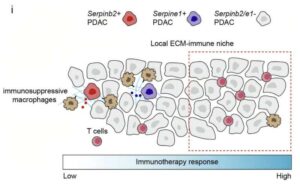
We were expecting the two components, the cells and the microenvironment, to evolve in lockstep. They did not,” said co-senior study author Marina Pasca di Magliano, Ph.D., Maud T. Lane Professor of Surgical Immunology and co-director of the Rogel and Blondy Center for Pancreatic Cancer at the University of Michigan.