Researchers diagnose disease with a drop of blood, a microscope and AI
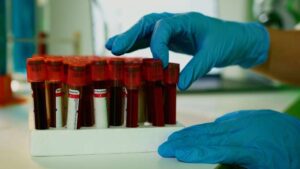
Not long ago, the idea of diagnosing a disease with a droplet of blood was considered a pipe dream. Today, this technology could soon become a reality.

Not long ago, the idea of diagnosing a disease with a droplet of blood was considered a pipe dream. Today, this technology could soon become a reality.

3D printed blood vessels on glass that mimic blood vessel anatomy and the fluid dynamics of blood flow could be an invaluable tool in studying the causes of stroke, new research from a University of Sydney team has found and it has already led to important insights.

Complex digital images of tissue samples that can take an experienced pathologist up to 20 minutes to annotate could be analyzed in just one minute using a new AI tool developed by researchers at the University of Cambridge.

Colonoscopies may one day have some competition—researchers report in ACS Sensors that they’ve developed a sensor made of tiny microspheres packed with blood-sensing bacteria that detect markers of gastrointestinal disease. Taken orally, the miniature “pills” also contain magnetic particles that make them easy to collect from stool.

Columbia University researchers are the first to show that focused ultrasound—a noninvasive technique that uses sound waves to enhance the delivery of drugs into the brain—can be safely used in children being treated for brain cancer.

Temporarily anesthetizing the retina briefly reverts the activity of the visual system to that observed in early development and enables growth of responses to the amblyopic eye, new research shows.

Carea, a pregnancy and postnatal wellbeing app that prioritises women’s health, has launched the Postpartum Mum Tracker to support the 1 in 5 new mothers who face post-birth mental health struggles.

CAMBRIDGE, Mass., Nov. 18, 2025 /PRNewswire/ — Nanopath, a point-of-care diagnostics company enabling high-quality molecular testing in minutes, today announced that the U.S. Food and Drug Administration (FDA) has granted Breakthrough Device designation for the company’s novel assay for the rapid detection of infection in patients with suspected, or at risk of, complicated urinary tract infections (UTIs).

A research team led by two University of Maine Ph.D. students developed an artificial intelligence (AI) system that could make it easier and faster for doctors to identify signs of breast cancer in tissue samples, possibly preventing delays and saving lives.

Artificial intelligence (AI) can predict how well patients with rectal cancer will respond to treatment by analyzing standard tissue samples taken during diagnosis, finds a new study from researchers at UCL and UCLH.