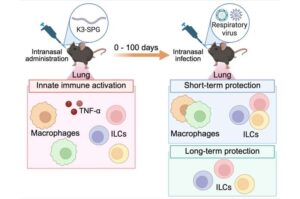
Nasal vaccine additive improves flu survival in mice even 100 days after treatment
Could the body’s natural defenses be temporarily strengthened without knowing which virus will emerge?

Could the body’s natural defenses be temporarily strengthened without knowing which virus will emerge?
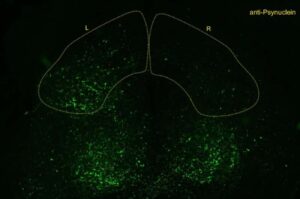
Parkinson’s disease is the second most common neurodegenerative disease. Over the last 30 years, studies have shown that a protein called alpha-synuclein abnormally aggregates in people with Parkinson’s disease, becoming toxic to neurons in a region of the brain that controls movement. This leads to tremor, rigidity and slowness of movement.

Two people infected with the same strain of COVID-19 can have vastly different experiences. One might never even sniffle, and the other might end up on a ventilator. But why?
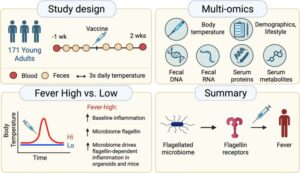
Vaccination is one of the most important tools for preventing infectious diseases and protecting public health. However, immune responses after vaccination vary dramatically from person to person: If you give many people the exact same vaccine, some will experience side effects such as fever and flulike symptoms while others feel fine.

BELLEVUE, Wash., Oct. 8, 2026 /PRNewswire/ — Viome PRO, the clinical division of Viome Life Sciences, today launched CancerDetect® Pancreatic, a blood test that looks for pancreatic ductal adenocarcinoma by measuring the enzyme activity associated with the disease. In Viome’s blinded validation, the test detected 86 percent of stage I and II cancers with 90 percent specificity, a performance aimed squarely at the early stages where treatment can still change the outcome. The test is ordered by a physician, drawn as a routine venous sample, and processed in Viome’s CLIA-certified laboratory.

Sonorous’ FDA IDE approval follows its BosSTENT’s receipt of FDA breakthrough device designation in February 2026.

Argus’s Neurora tool is intended to complement clinicians’ professional judgement rather than serve as a standalone diagnostic for autism.
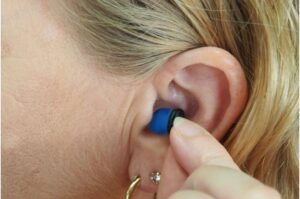
A team of hearing specialists at Vanderbilt Health analyzed thousands of data samples in the institution’s BioVU biobank to understand genetic susceptibility of sensorineural hearing loss, which is caused by damage to the inner ear. Their study is published in JAMA Otolaryngology-Head & Neck Surgery.
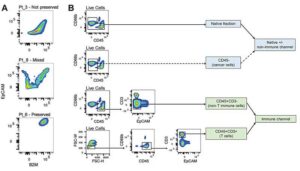
In a study published in Science Immunology, researchers used malignant ascites—fluid that accumulates in the abdomen of some patients when cancer metastasizes to the abdominal cavity—to uncover immune programs associated with metastatic disease, including a rare population of RORC-expressing dendritic cells not previously linked to human cancer.
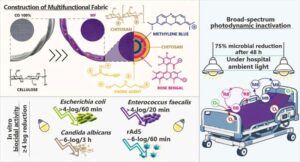
A team has developed a new self-disinfecting cotton fabric capable of eliminating bacteria, fungi and viruses in hospital settings using visible light.