Blog

- DISEASE ADVANCES

New AI tool predicts whether aggressive small cell lung cancer will respond to treatment

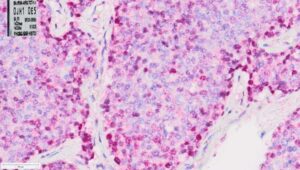
Results of a new study conclude that a pathology tool powered by artificial intelligence can predict whether a patient with extensive-stage small cell lung cancer will respond to platinum-based chemotherapy—before treatment has begun, and without additional biopsies. That means patients can avoid treatments that are unlikely to help them, have a chance to enroll earlier in clinical trials of newer drugs, and may get a clearer picture of their prognosis.

Read More »

Scalable sensors lower the cost of studying genetic disorders

Researchers have demonstrated a new class of low-cost, scalable sensors that can be used to monitor electrical activity in human cerebral organoids. Because electrical signals are key to understanding brain function, this advancement facilitates research into both neurodevelopment and genetic disorders such as Angelman syndrome.

Read More »

Smart titanium implant enables rapid bacteria elimination and enhanced bone regeneration

A research team from the Department of Orthopedics and Traumatology, School of Clinical Medicine, LKS Faculty of Medicine at the University of Hong Kong (HKUMed), has developed a titanium implant surface that can be activated by near-infrared (NIR). With just 15 minutes of NIR irradiation, this surface can eliminate 99.94% of Staphylococcus aureus (S. aureus) biofilms without the use of antibiotics, while simultaneously promoting bone-implant fusion.

Read More »