
Scientists uncover two-pronged strategy to overcome glioblastoma’s resistance to immunotherapy
Scientists at The Wistar Institute have identified a combination treatment that overcomes two of the biggest barriers to immunotherapy in glioblastoma.

Scientists at The Wistar Institute have identified a combination treatment that overcomes two of the biggest barriers to immunotherapy in glioblastoma.
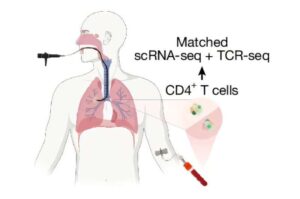
A ‘rising fog’ may cloud the immune system’s ability to detect tumors and may be the key to tackling lung cancer that is developing years before diagnosis. The team at University College London (UCL) followed this signal using prototype blood tests and reversed it using drugs.
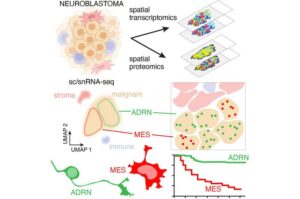
Neuroblastoma is the most common solid tumor found outside the brain in children, yet why some children respond well to treatment while others do not has remained poorly understood.
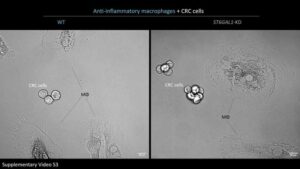
Our bodies contain immune cells called macrophages. Normally, these cells attack and suppress bacteria and cancer cells. However, when macrophages infiltrate tumors, they can become tumor-associated macrophages (TAMs) and can switch to an immunosuppressive, anti-inflammatory state.

SEATTLE and SAN DIEGO, Oct. 8, 2026 /PRNewswire/ — Monod Bio and BPS Bioscience today announced a non-exclusive licensing agreement covering Monod Bio’s LuxSit Pro de novo luciferase and NovoBody binding proteins. BPS plans to integrate the technologies into the development of innovative research products and services for drug discovery and life science applications.

Their new study, published Oct. 7 in Nature, solves a decades-old scientific puzzle and reveals that a critical inflammatory signaling pathway doesn’t just summon immune cells to the place where they’re needed—it also protects healthy cells from being damaged by the immune response.
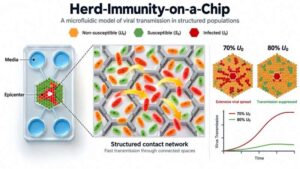
A research team led by Professor Sungsu Park of the School of Mechanical Engineering and Professor Byung Mook Weon of the School of Advanced Materials Science and Engineering at Sungkyunkwan University (SKKU) has developed a compact, centimeter-scale microfluidic “Herd-Immunity-on-a-Chip” platform that recreates key features of viral transmission in human societies within a controllable laboratory system.
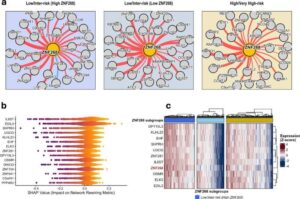
A new study revealed molecular features linked to more aggressive prostate cancer in a subset of patients who had been classified as low risk, highlighting biological differences that may not be apparent from clinical measures alone. The results could lead to new therapeutic strategies.
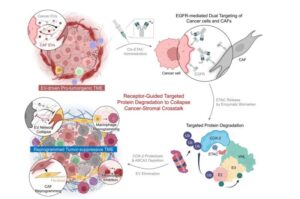
A research team has developed an anticancer treatment platform that simultaneously targets cancer cells and the surrounding cells that support them while blocking communication between the two.

Researchers have carried out the first single-cell analysis of mitochondrial DNA in a population of brainstem neurons that are particularly vulnerable to degeneration in Parkinson’s disease.