This Detailed Map of a Human Cell Could Help Us Understand How Cancer Develops
Mapping a human cell gives researchers a view of subcellular architecture and sheds light on how cancer develops.

Mapping a human cell gives researchers a view of subcellular architecture and sheds light on how cancer develops.

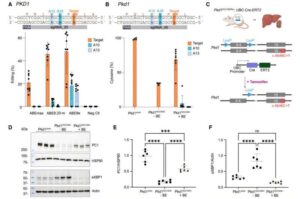
Researchers redesign a compact RNA-guided enzyme from bacteria, making it an efficient editor of human DNA.

Researchers at McGill University and other institutes recently carried out a study aimed at identifying biomarkers and psychosocial factors associated with the development of chronic pain conditions. Their findings, published in Nature Human Behavior, were obtained by analyzing data from a large biomedical database, namely the UK Biobank, using advanced machine learning techniques.

Successfully treating type 2 diabetes may involve focusing on brain neurons, rather than simply concentrating on obesity or insulin resistance, according to a study published today in the Journal of Clinical Investigation.

Their study yielded hundreds of “cryptic” peptides that are found only on pancreatic tumor cells and could be targeted by vaccines or engineered T cells.

New Liquid Biopsy Technology Offers Hope in Diagnosing One of the Deadliest Cancers at an Early Stage

Two meters of DNA is crammed into the nucleus of every human cell. Bin Zhang wants to know how gene expression works in this minuscule space.

The research team, led by Professor Minee L. Choi from the Department of Brain and Cognitive Sciences, in collaboration with University College London (UCL) and the Francis Crick Institute, discovered that the RNA-editing enzyme ADAR1 plays an important role in controlling immune responses in astrocytes, glial cells that trigger protective reactions in the brain, and demonstrated that this mechanism is critically involved in the progression of Parkinson’s disease.

Researchers from Children’s Hospital of Philadelphia (CHOP) and the Perelman School of Medicine at the University of Pennsylvania (Penn Medicine) have successfully employed an algorithm to identify potential mutations which increase disease risk in the noncoding regions of our DNA, which make up the vast majority of the human genome.

Even though the virus was first discovered in laboratory monkeys in 1958, the original source came from a squirrel.